
Monetary System
US Debt Hits $40 Trillion: Is the Bond Market Pushing Back?
Aug
This Week:
Estimated reading time: 6 minutes
📊 Weekly Price Overview – 26 August 2026
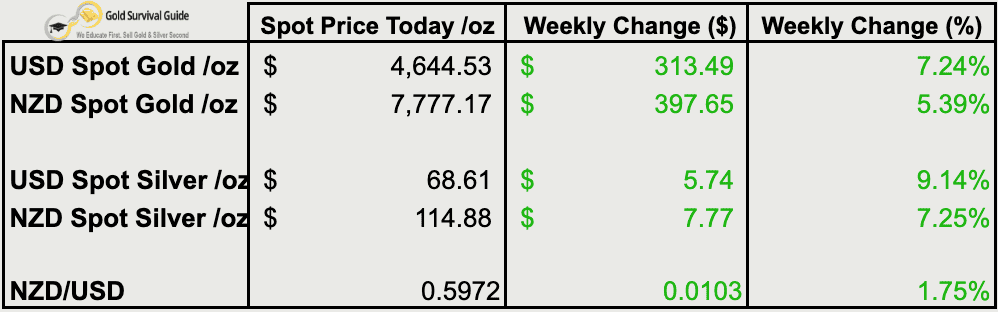
Precious metals surged this week, with gold and silver breaking higher after their recent consolidation. Both metals are now testing important resistance levels.
🟡 NZD gold rose $398 (+5.39%) to $7,777
NZD gold broke above $7,500 resistance and its 200-day moving average. The lows now look likely to be in, with averaging in on dips still looking attractive.
USD gold rose $313 (+7.24%) to $4,645
USD gold surged above its 200-day moving average after a brief consolidation. The bottom looks to be around $4,000, with $4,750 the next resistance level.
⚪ NZD silver rose $7.77 (+7.25%) to $114.88
NZD silver is testing its downtrend line and looks headed towards its 200-day moving average. It remains in an attractive long-term buying zone.
USD silver rose $5.74 (+9.14%) to $68.61
USD silver surged towards its 200-day moving average after a brief consolidation. The $55 area looks to have marked the bottom, with dips still offering a good long-term buying opportunity.
💱 NZD/USD rose 103 basis points (+1.75%) to 0.5972
The Kiwi dollar looks to be breaking above its downtrend line from 2021. A move above 0.61 would provide a stronger signal of a change in its long-term trend.
What Is Your Gold Actually For?
People often talk about “investing in gold”. But what does that mean?
Are you buying gold to make a return? Or are you buying it to protect wealth?
Depending on your answer, the type of gold you own — and how you own it — can matter just as much as the gold price.
This week we look at some cautionary examples from New Zealand and overseas, and one question we think every gold buyer should ask before handing over their money.
Read: Don’t Confuse Investing With Wealth Protection →

US Debt Hits $40 Trillion — And the Bond Market Is Pushing Back
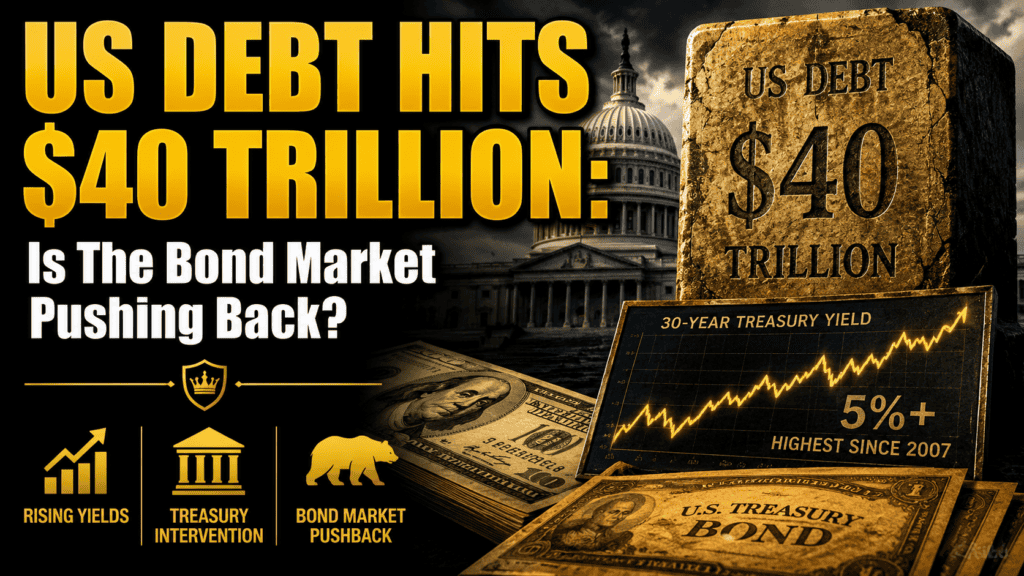
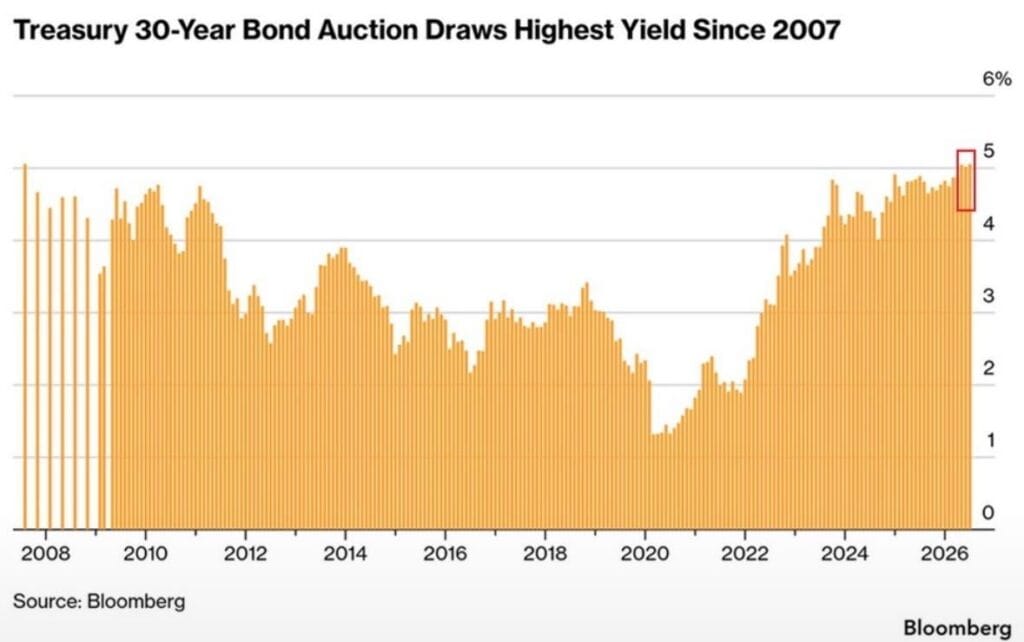
US government debt has now passed $40 trillion, while the yield on the 30-year Treasury recently climbed above 5% — its highest level since 2007.
Higher yields mean higher borrowing costs for a government already running large deficits.
As Matt Oliver neatly put it:
“The debt pile is the same. The interest bill is not.”
As interest costs climb, Washington needs to borrow more simply to service its existing debt.
The Treasury Steps In. But the Market Pushes Back
The US Treasury has responded by doubling the size of some of its planned buybacks of longer-dated government bonds, from $2 billion to at least $4 billion per operation.
Treasury Secretary Scott Bessent has also floated the possibility of using money held in the Treasury General Account (TGA) to fund further purchases.
The aim is to increase demand for longer-dated bonds and take some pressure off yields.
Yields initially fell following the intervention, before climbing again.
Read more: Reuters — US Treasury doubles some long-dated debt buybacks
Meanwhile, the US dollar has weakened and gold has risen strongly.
Gold has historically tended to struggle when long-term yields rise. Yet recently, both gold and long-term yields have been rising together.
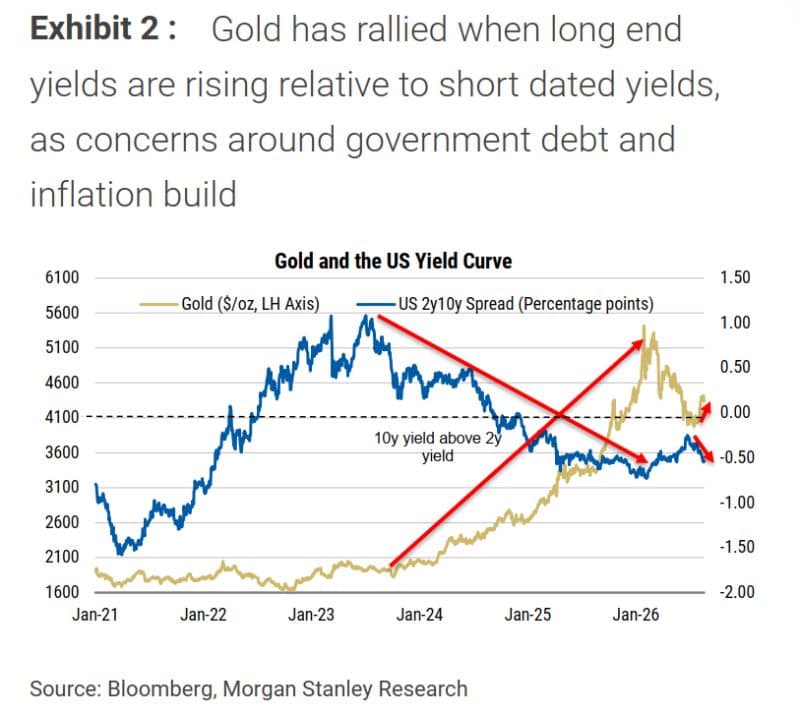
Gold may no longer be reacting simply to the level of interest rates. Rising long-term rates can also signal concern about government debt, future inflation and the value of the currency those debts will eventually be repaid in.
Higher yields can make bonds more attractive. But they can also reveal why investors are demanding more compensation to lend to the US Government in the first place.
Why Central Banks May Want More Gold
In 2022, the US and its allies froze hundreds of billions of dollars of Russian central bank reserves following the invasion of Ukraine.
Now Washington is threatening to cut entities doing business with Iran off from the US dollar system, potentially including Chinese financial institutions.
For countries holding large foreign exchange reserves, episodes like these highlight a growing risk:
Access to financial assets can depend upon the rules of the financial system in which they’re held.
Gold is different. It has no issuing government and, when owned outright, no corresponding counterparty.
That may help explain why central banks have been such significant gold buyers in recent years.
Consider a thought experiment doing the rounds this week.
Global private wealth is estimated at roughly $350 trillion, while only a small percentage is currently allocated to gold.
If that allocation increased by just one percentage point, around $3.5 trillion of additional capital would seek exposure to gold — many times the value of annual mine supply.
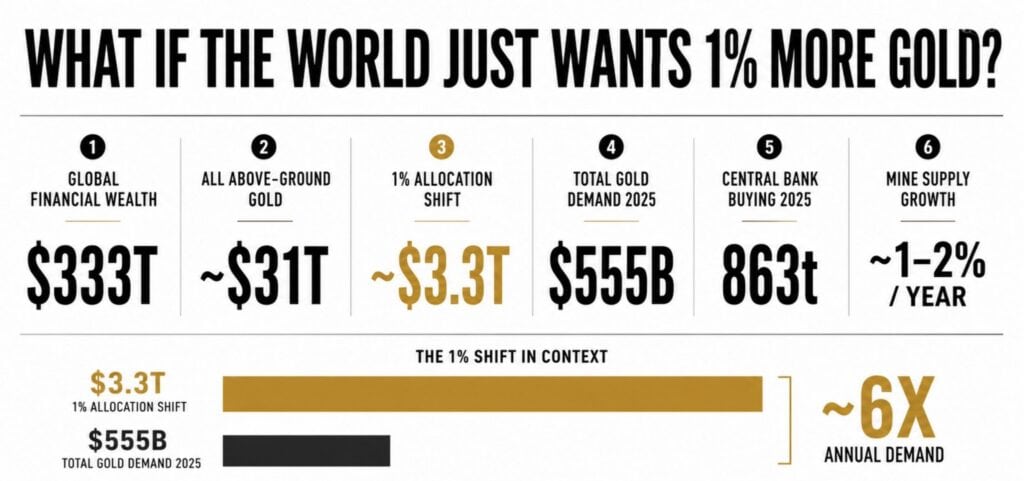
No $10,000 or $20,000 gold prediction is required to make the point.
Gold remains a relatively small market compared with the enormous pool of global financial wealth.
So What Is Gold Actually For?
That brings us back to the question in this week’s featured article:
What is your gold actually for?
If you’re buying gold because you think its price will rise, exposure to the gold price may be all you’re looking for.
But if you’re buying gold to protect against government debt, currency debasement, counterparty risk or a loss of confidence in the financial system, then how you own that gold becomes vital.
If the risks you’re trying to protect against lie within the financial system, it makes sense to consider whether your chosen form of gold also depends upon that same system.
That’s why we view gold as wealth insurance first and an investment second.
The events unfolding in the US bond market help explain exactly what that insurance is intended to protect against.
Read: Don’t Confuse Investing With Wealth Protection: What Is Gold Actually For? →

Glenn's dedication to educating individuals on wealth protection through precious metals has helped over 2400 clients from New Zealand, Australia, USA and Europe to safeguard their financial futures. Passionate about financial independence and lifestyle freedom, Glenn’s mission is to empower others with the knowledge and tools to thrive in today’s volatile economic environment. When he's not advising on precious metals, Glenn enjoys spending time with his family and pursuing outdoor adventures.
Education: University of Auckland Bachelor of Science
Linkedin: https://www.linkedin.com/in/glenn-thomas-0984a4310/
- What Type of Gold Bar Should I Buy? (Best Sizes, Brands & Bars Explained) - October 20, 2026
- Gold Prices Fall as ETF Investors and Established NZ Buyers Keep Buying - October 14, 2026
- What Are The Different Types of Gold Bars? - October 13, 2026
