
Gold
Central Banks Continue Building Their Gold Reserves

Jul
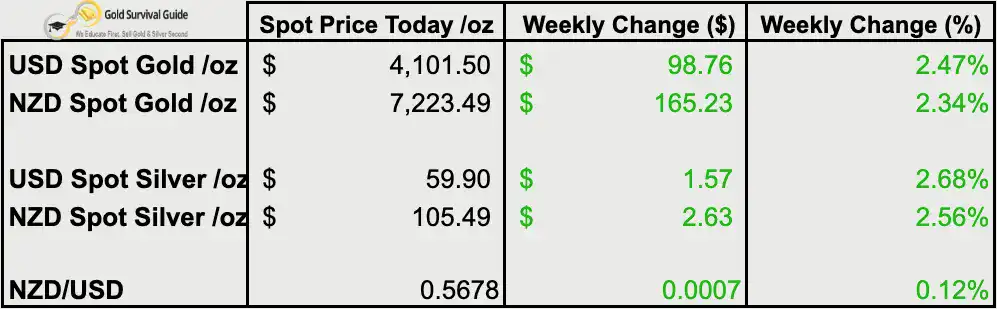
Table of contents
Estimated reading time: 6 minutes
Weekly Price Overview – 8 Jul 2026
Precious metals rebounded this week after retesting key support levels. Gold bounced from its major buying zone, while silver staged a sharp recovery after briefly breaking below recent lows. Averaging in continues to look sensible.
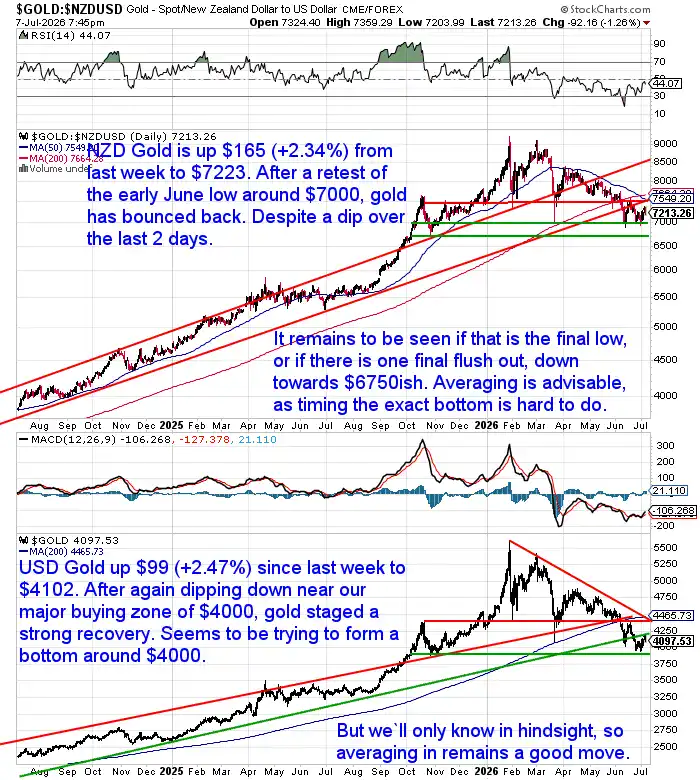
🟡 NZD gold rose $165 (+2.34%) to $7,223
NZD gold bounced from the early June low around $7,000 after retesting support. A final flush towards $6,750 remains possible, so averaging in still looks sensible.
USD gold rose $99 (+2.47%) to $4,102
USD gold rebounded after again testing the major $4,000 buying zone. It seems to be forming a bottom, though this will only be clear in hindsight.
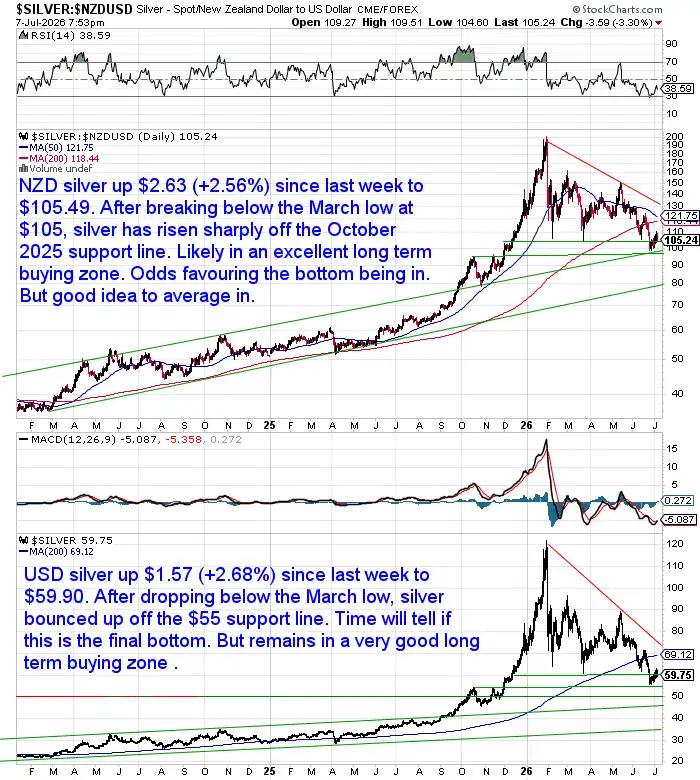
⚪ NZD silver rose $2.63 (+2.56%) to $105.49
NZD silver rebounded sharply after briefly breaking below the March low near $105. It remains in an excellent long-term buying zone. Averaging in continues to make sense.
USD silver rose $1.57 (+2.68%) to $59.90
USD silver bounced from the $55 support zone after falling below the March low. It remains in a very good long-term buying zone. If the final bottom isn’t already in, it is likely close.
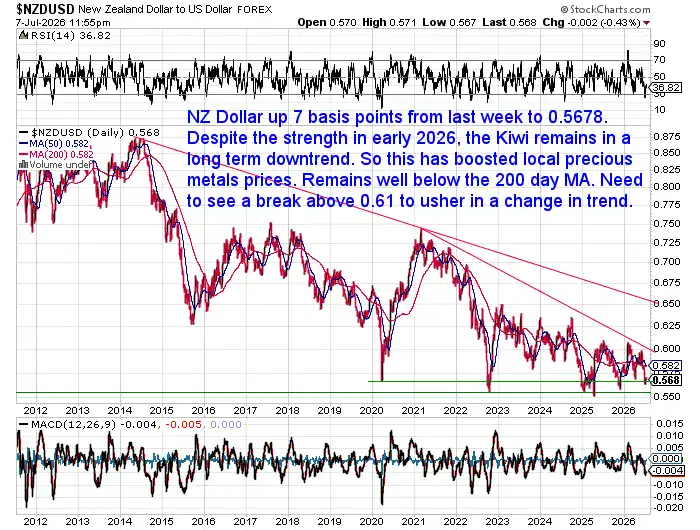
💱 NZD/USD rose 7 basis points (+0.12%) to 0.5678
The Kiwi dollar was little changed this week and remains in a long-term downtrend. A break above 0.61 is still needed to signal a trend change. Until then, the weak NZ dollar continues to support local precious metals prices.
Could New Zealand Ever Build Its Own Gold Reserves?
This week the Government announced support for two new critical minerals processing projects on the West Coast, describing them as part of a broader strategy to strengthen New Zealand’s minerals sector and capture more value from our natural resources.
While the announcement isn’t about gold reserves, it got us thinking.
If New Zealand is taking a more strategic approach to its mineral wealth, could a future government ever decide to rebuild official gold reserves?
Most people assume that would require spending billions of dollars buying gold on international markets.
There are several possible approaches.
A government could purchase gold directly from New Zealand producers, gradually accumulate reserves over time, or even convert a small portion of existing foreign currency reserves into physical gold.
Whether any government should do so is, of course, a separate question.
Our latest article explores how it could be done, the trade-offs involved, and what investors can learn from how countries think about long-term reserve assets.
Read: Could New Zealand Rebuild Its Gold Reserves?

Central Banks Continue Building Their Gold Reserves
If New Zealand ever chose to rebuild its gold reserves, it would be joining a trend that has been developing for several years.
The latest figures from the World Gold Council show that central banks purchased 41 tonnes of gold in May, more than double April’s 19 tonnes.
China recorded its largest monthly purchase since late 2024, extending its buying streak to 20 consecutive months.
Poland remained the largest buyer, adding another 18 tonnes during May and bringing its total purchases this year to 64 tonnes.
Many central banks continue to treat physical gold as a strategic reserve asset rather than simply another investment.
More Central Banks Now Hold Physical Gold
The latest OMFIF Global Public Investor 2026 report found that 82% of central banks now hold physical gold, up from 71% a year ago. A net 30% expect to increase their gold holdings over the next one to two years, while only 28% say today’s higher gold price is discouraging further purchases.
The survey also asked where respondents expect the gold price to be over the next 12 months. Around six in ten expect gold to trade between US$5,000 and US$6,000 per ounce by mid-2027.
Protection against geopolitical risk is becoming an increasingly important reason for holding gold as a long-term reserve asset.
The World Gold Council’s 2026 Central Bank Gold Reserves Survey paints a similar picture. It found that 89% of respondents expect global central bank gold reserves to increase over the next 12 months, while a record 45% expect their own central bank to increase its gold holdings.
New Zealand remains one of the relatively small number of countries that hold no official gold reserves.
Should New Zealand immediately begin buying gold? That’s a separate question. But as more central banks continue increasing their gold holdings, it is worth asking what role, if any, gold should play in New Zealand’s long-term reserve strategy.
Gold Allocations Remain Well Below Previous Highs
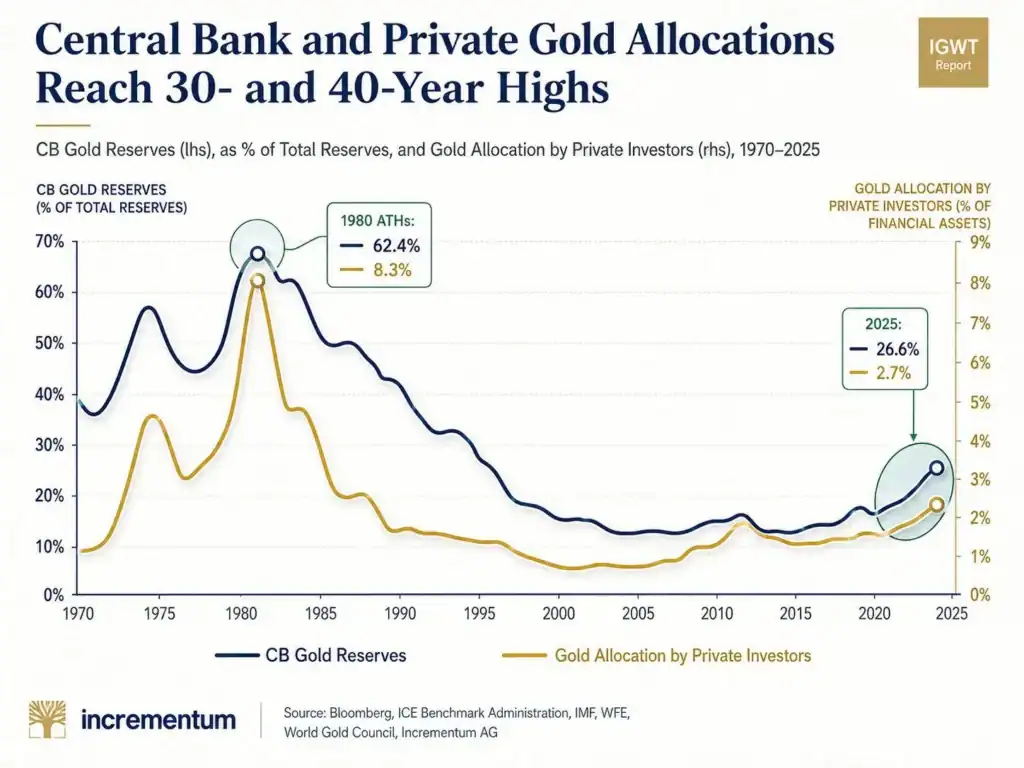
This chart compares today’s gold allocations with those of the early 1980s.
Despite many years of central bank buying, official gold reserves still represent 26.6% of total reserves, compared with 62.4% in 1980.
Private investors also remain lightly allocated.
Today they hold around 2.7% of financial assets in gold. In 1980 that figure was approximately 8.3%.
Even after several years of strong demand, gold ownership remains well below previous historical peaks.
In Case You Missed It…
This week’s article looks at how governments think about reserve assets.
Last week we explored the same idea from an individual’s perspective.
While central banks build national reserves, individuals can also think about building their own long-term financial reserves through assets they own directly.
Read: Why You Should Become Your Own Central Bank
In Closing
Whether New Zealand ever rebuilds official gold reserves remains uncertain.
The broader trend is much easier to see.
Around the world, central banks continue increasing their gold holdings as they review the composition of their long-term reserves.
For individual investors, the lesson isn’t to copy every central bank purchase. It’s to understand why central banks hold reserve assets in the first place.
If you’d like to discuss what your own long-term reserves could look like, simply reply to this email or give us a call. We’re always happy to answer your questions.

Glenn's dedication to educating individuals on wealth protection through precious metals has helped over 2400 clients from New Zealand, Australia, USA and Europe to safeguard their financial futures. Passionate about financial independence and lifestyle freedom, Glenn’s mission is to empower others with the knowledge and tools to thrive in today’s volatile economic environment. When he's not advising on precious metals, Glenn enjoys spending time with his family and pursuing outdoor adventures.
Education: University of Auckland Bachelor of Science
Linkedin: https://www.linkedin.com/in/glenn-thomas-0984a4310/
- What Type of Gold Bar Should I Buy? (Best Sizes, Brands & Bars Explained) - October 20, 2026
- Gold Prices Fall as ETF Investors and Established NZ Buyers Keep Buying - October 14, 2026
- What Are The Different Types of Gold Bars? - October 13, 2026
