
Gold
What Are The Different Types of Gold Bars?

Oct
Gold bars come in different shapes, sizes and finishes. Some are smooth and precisely made, while others have the more natural appearance of poured gold.
You may also come across terms such as ingot, gold biscuit or London Good Delivery bar. But do these describe different types of gold bars, or simply different names and sizes?
Here’s what each term means.
Quick Answer: What Are the Different Types of Gold Bars?
Gold bars are mainly made in two ways: cast (poured) or minted. Cast bars have a more natural, sometimes uneven finish. Minted bars are smoother and more uniform.
Other formats include CombiBars, which can be divided into smaller pieces. Gold bars also come in different weights, from one gram to large bars used in wholesale markets.
Terms such as gold ingot, gold brick and gold biscuit are alternative names or informal descriptions, rather than separate manufacturing types.
Table of contents
- Quick Answer: What Are the Different Types of Gold Bars?
- What Is a Gold Bar?
- What Are the Two Main Types of Gold Bars?
- What Are CombiBars and Divisible Gold Bars?
- What Sizes Do Gold Bars Come In?
- What Do Gold Bar Purity and Markings Mean?
- Other Gold Bar Types and Terms You May Encounter
- Frequently Asked Questions About Gold Bars
- Which Type of Gold Bar Should You Buy?
Estimated reading time: 9 minutes
What Is a Gold Bar?
A gold bar is a piece of refined gold made to a specified weight and purity.
Gold bars are produced by refiners and mints. They are usually stamped with their weight, purity and the manufacturer’s name or hallmark.
Investment gold bars are commonly made from 99.9% or 99.99% pure gold, although other purity standards exist.
What Else Is a Gold Bar Called?
Several names are used for gold bars:
- Gold ingot: Another common name for a gold bar. In everyday bullion use, the terms generally mean the same thing.
- Gold bullion bar: A bar of refined gold produced in a recognised weight and purity. Bullion is a broader term that also includes investment-grade gold coins and other precious metals.
- Gold brick: An informal name for a gold bar, often used to describe the large bars seen in films or bank vaults.
- Gold biscuit: Another informal term for a gold bar, sometimes used for smaller bars, particularly in overseas markets.
These names don’t necessarily indicate different gold content or manufacturing methods.
What Are the Two Main Types of Gold Bars?
Gold bars are generally classified as either cast or minted, based on how they’re manufactured.
Both can contain the same amount and purity of gold. The main differences are their production methods, appearance and finish.
Cast Gold Bars (Poured Gold Bars)
Cast gold bars are made by pouring molten gold into a mould and allowing it to cool and solidify.
The resulting bars usually have a slightly uneven surface, rounded edges and a less uniform appearance.
Some cast bars have ripples, cooling marks or small surface imperfections. These are normal features of the casting process.
The bar is then marked with details such as its weight, purity and refiner’s hallmark.
Cast bars are sometimes called poured gold bars or cast gold ingots.
Minted Gold Bars
Minted gold bars have a smoother, more uniform appearance.
They are generally made from precisely rolled gold blanks, which are cut to size and then stamped or pressed to create the finished bar.
Minted bars often feature detailed designs, polished surfaces and clearly defined edges.
Some are supplied in sealed packaging that also displays their weight, purity and other identifying details.
Cast vs Minted Gold Bars: What’s the Difference?
| Feature | Cast gold bars | Minted gold bars |
|---|---|---|
| Manufacturing | Molten gold poured into a mould | Gold blanks cut and stamped or pressed |
| Appearance | More natural, uneven finish | Smooth, uniform finish |
| Edges | Often slightly rounded | Usually more precisely defined |
| Surface | May show cooling marks | Often polished or patterned |
| Packaging | Varies by refiner | Often supplied in protective assay packaging |
| Gold content | Depends on weight and purity | Depends on weight and purity |
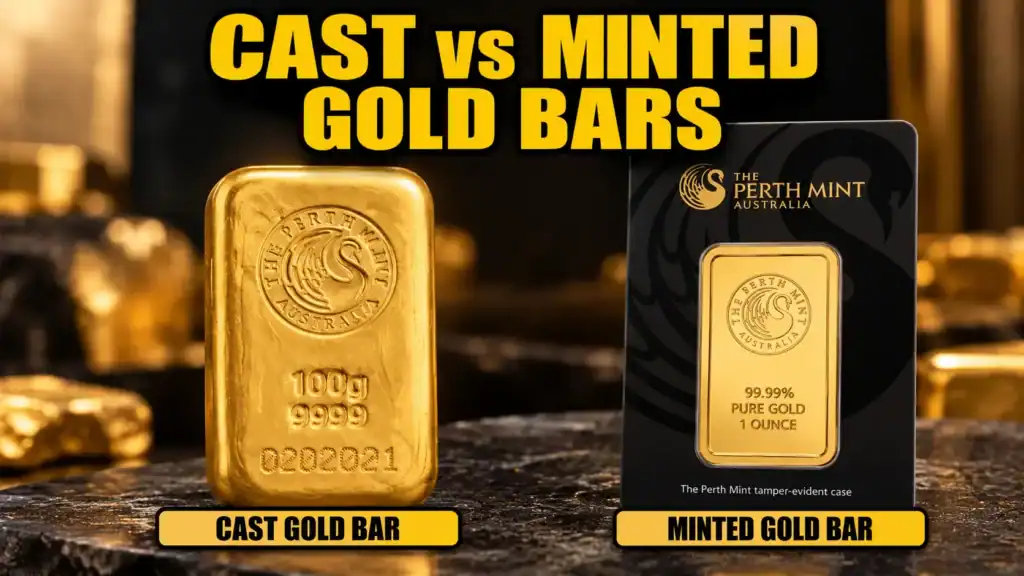
Cast bars often have a more uneven finish, while minted bars are usually smoother and more uniform.
A one-ounce cast bar and a one-ounce minted bar of the same purity contain the same amount of gold. However, their purchase prices may differ.
For help deciding between them, see What Type of Gold Bar Should I Buy?.
What Are CombiBars and Divisible Gold Bars?
A CombiBar is a gold bar made up of smaller, connected sections that can be separated when needed.
Unlike a conventional gold bar, which remains one solid piece, a CombiBar can be divided into individual gold units without melting or cutting the metal.
For example, ABC Bullion produces two divisible gold bars:
- 20 × 1g ABC Gold CombiBar — 20 grams of gold divided into twenty 1g sections.
- 50 × 1g ABC Gold CombiBar — 50 grams of gold divided into fifty 1g sections.
Each section contains one gram of 99.99% pure gold.
Swiss refiner Valcambi also produces CombiBars, which Gold Survival Guide has sourced for New Zealand customers.
CombiBars are sometimes described as divisible gold bars or breakable gold bars. They’re a specialised form of minted bullion, rather than a third main manufacturing method.
What Sizes Do Gold Bars Come In?
Gold bars range from small one-gram pieces to large bars weighing more than 12 kilograms.
Common gold bar sizes include:
| Weight | Approximate weight in troy ounces |
|---|---|
| 1 gram | 0.032 oz |
| 5 grams | 0.161 oz |
| 10 grams | 0.322 oz |
| 20 grams | 0.643 oz |
| 1 troy ounce | 1 oz (31.1035g) |
| 50 grams | 1.608 oz |
| 100 grams | 3.215 oz |
| 1 kilogram | 32.151 oz |
A troy ounce is the standard unit used to weigh precious metals. One troy ounce equals approximately 31.1035 grams, slightly more than the ordinary ounce used for everyday goods.
For more on the difference between these measurements, see our guide: What Is a Troy Ounce?
Not every refiner produces every size. Some specialise in smaller retail bars, while others manufacture larger bars for wholesale markets.
What Is a Standard Gold Bar?
There is no single standard weight for all gold bars.
However, the large gold bars often seen in bank vaults are commonly known as 400-ounce gold bars or London Good Delivery bars.
A London Good Delivery gold bar typically weighs around 400 troy ounces, or 12.4 kilograms.
It does not have to weigh exactly 400 ounces. Under London Bullion Market Association (LBMA) standards, the permitted fine-gold content ranges from 350 to 430 troy ounces.
These bars must also meet specific requirements for purity, dimensions, markings and manufacture.
London Good Delivery bars are mainly used in wholesale bullion markets rather than by individual retail buyers.
A one-kilogram gold bar is sometimes called a kilobar. Although kilobars are widely traded, they are not the same as London Good Delivery bars.
Here’s an example of a one-kilogram gold bar available through Gold Survival Guide:
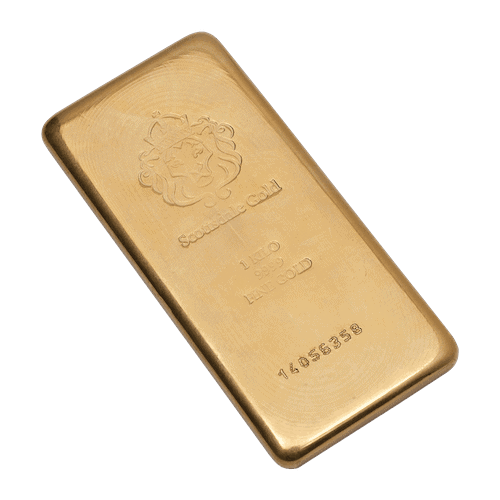
1 Kg Scottsdale Mint Gold Kilo Bar
Shipping is included in the displayed price.
Estimated delivery: typically around 3–4 weeks. Delivery times can vary depending on availability and market conditions.
| DIMENSIONS | 111 x 50.5 x 10 mm |
|---|---|
| BRAND | Scottsdale Mint |
| PURITY | 99.99% (.9999) |
What Do Gold Bar Purity and Markings Mean?
Gold bars are usually stamped with information that identifies their gold content and manufacturer.
Common markings include:
- Weight: The bar’s weight in grams, kilograms or troy ounces.
- Purity (fineness): How much of the bar is pure gold.
- Refiner’s mark: The name or hallmark of the company that produced the bar.
- Serial number: A unique identifying number found on some bars.
What Does 999.9 Mean on a Gold Bar?
The number 999.9 means the bar contains 999.9 parts of pure gold per 1,000 parts, or 99.99% gold.
Other purity markings include:
| Marking | Gold purity |
|---|---|
| 995 | 99.5% |
| 999 | 99.9% |
| 999.9 | 99.99% |
Many retail investment gold bars are made from 99.99% pure gold.
London Good Delivery gold bars must have a minimum fineness of 995 parts per 1,000.
Purity is separate from a bar’s weight or manufacturing method. Both cast and minted bars can be made from 99.99% pure gold.
For a fuller explanation of fineness, karats and precious metal standards, see our guide to gold and silver purity.
Other Gold Bar Types and Terms You May Encounter
Most gold bars sold to New Zealand retail buyers are cast or minted bars. However, a few other terms appear in the wider gold market.
Gold Doré Bars
A doré bar is a partly refined bar containing gold and other metals, often including silver.
Doré bars are commonly produced at mining operations before being sent to a refinery for further processing.
Unlike a finished investment-grade bullion bar, a doré bar does not have a standard high purity. Its gold content varies depending on the material being processed.
Tael Gold Bars
A tael bar is a gold bar measured using the tael, a traditional weight unit used in parts of Asia.
Tael weights and bar specifications can vary between markets. For example, the traditional Hong Kong gold tael is approximately 37.4 grams.
Tael bars are less common in the New Zealand retail bullion market, where grams, kilograms and troy ounces are more widely used.
Gold Wafers
A gold wafer is a thin, flat gold bar, generally made using minting or similar precision manufacturing methods. The term describes its shape rather than a separate purity or manufacturing category.
New and second-hand gold bars: A second-hand gold bar is simply a bar that has been owned before. If its weight, purity and authenticity are confirmed, it contains the same amount of gold as an equivalent new bar. Condition, packaging and the refiner may still affect how it is traded.
Frequently Asked Questions About Gold Bars
Yes. In everyday bullion use, gold bar and gold ingot generally mean the same thing. The term ingot can also refer to other metals.
A gold biscuit is an informal term for a gold bar, often a smaller or flatter bar. It isn’t necessarily a CombiBar, which is designed to separate into smaller pieces.
A gold brick is an informal name for a gold bar, often associated with the large bars seen in bank vaults. It doesn’t describe a specific weight or manufacturing method.
No. Gold bars have different purity levels. Many retail investment bars contain 99.9% or 99.99% gold, while partly refined doré bars can contain substantial amounts of other metals.
No. A 1kg bar is called a kilobar. London Good Delivery gold bars are much larger, typically weighing around 400 troy ounces, and must meet specific LBMA standards.
Which Type of Gold Bar Should You Buy?
Understanding the different types of gold bars is useful, but choosing one involves more than its appearance or manufacturing method.
The bar’s weight, purchase premium, refiner and potential resale options can all affect your decision.
For help comparing these factors, read our guide: What Type of Gold Bar Should I Buy?.
You can also browse the gold bars available through Gold Survival Guide to see examples of different sizes, refiners and finishes.
Editor’s Note: This article was first published on 27 October 2022. Fully rewritten 13 October 2026.

Glenn's dedication to educating individuals on wealth protection through precious metals has helped over 2400 clients from New Zealand, Australia, USA and Europe to safeguard their financial futures. Passionate about financial independence and lifestyle freedom, Glenn’s mission is to empower others with the knowledge and tools to thrive in today’s volatile economic environment. When he's not advising on precious metals, Glenn enjoys spending time with his family and pursuing outdoor adventures.
Education: University of Auckland Bachelor of Science
Linkedin: https://www.linkedin.com/in/glenn-thomas-0984a4310/
- What Type of Gold Bar Should I Buy? (Best Sizes, Brands & Bars Explained) - October 20, 2026
- Gold Prices Fall as ETF Investors and Established NZ Buyers Keep Buying - October 14, 2026
- What Are The Different Types of Gold Bars? - October 13, 2026
