
Gold
Gold Prices Fall as ETF Investors and Established NZ Buyers Keep Buying

Oct
This Week:
- 📊 Weekly Price Overview – 14 October 2026
- Gold Prices Have Fallen Sharply. Is Now the Time to Buy?
- Gold Prices Have Fallen, But Larger Buyers Are Still Buying
- Gold ETF Holdings Hit a Record Despite the Price Fall
- China’s Central Bank Increased Its Gold Buying in September
- New Zealand’s Government Debt Interest Bill Has Tripled
- Gold’s Price Fall Has Been Smaller in New Zealand Dollars
- Chart of the Week: Silver Returns to a Long-Term Trendline
Estimated reading time: 7 minutes
📊 Weekly Price Overview – 14 October 2026
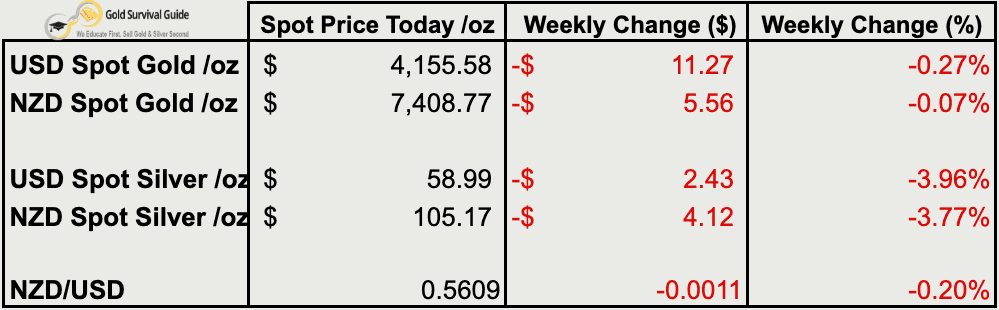
Gold was little changed this week, while silver fell sharply. A weaker Kiwi dollar helped cushion the falls in NZ dollar terms.
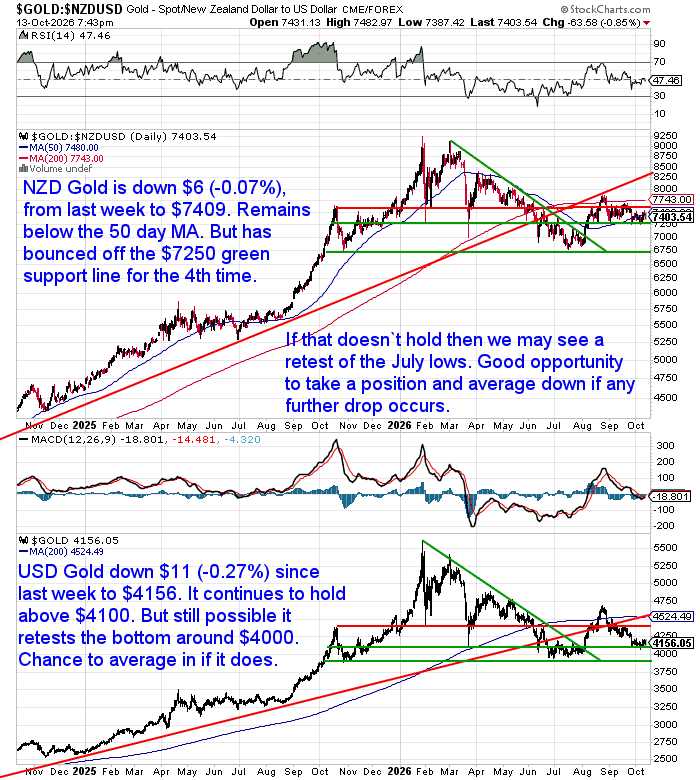
🟡 NZD gold fell $6 (-0.07%) to $7,409
NZD gold remains below its 50-day moving average. It has bounced off support near $7,250 for the fourth time.
USD gold fell $11 (-0.27%) to $4,156
USD gold remains above $4,100. A further fall could see support near $4,000 tested.
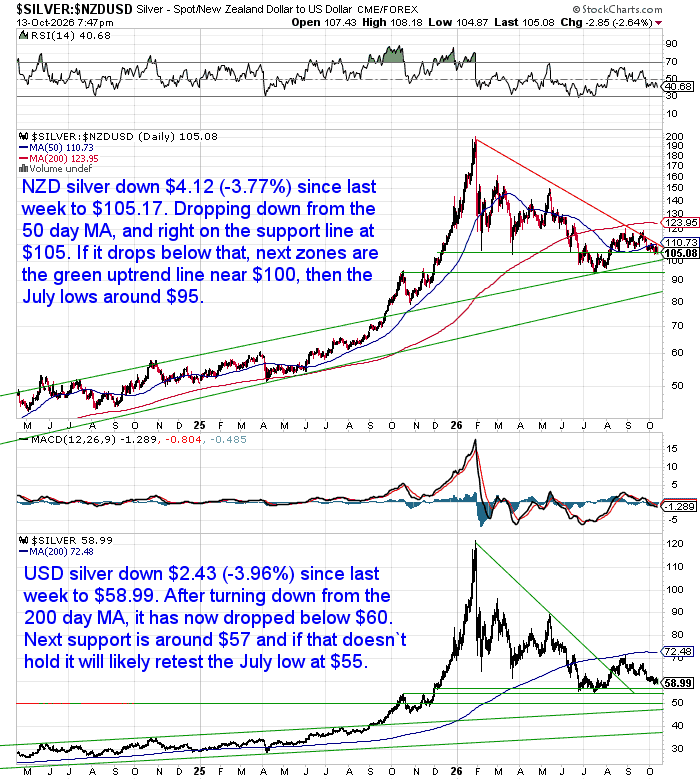
⚪ NZD silver fell $4.12 (-3.77%) to $105.17
NZD silver has fallen below its 50-day moving average. It is now testing support near $105. Below that, support sits near $100 and $95.
USD silver fell $2.43 (-3.96%) to $58.99
USD silver has fallen below $60. Support sits near $57, followed by the July low around $55.
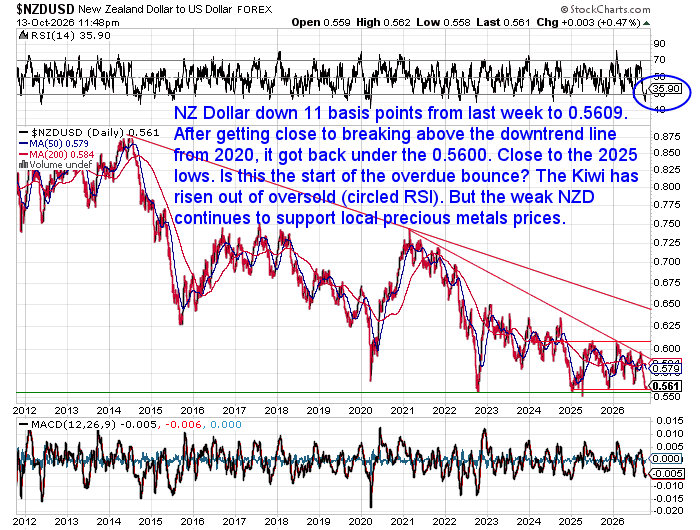
💱 NZD/USD fell 11 basis points (-0.20%) to 0.5609
The Kiwi dollar remains near its 2025 lows. It is approaching oversold levels, which could signal a short-term bounce.
Gold Prices Have Fallen Sharply. Is Now the Time to Buy?
Gold has fallen sharply from its record highs earlier this year. So is now a good time to buy, or could waiting a little longer pay off?
We’ve noticed a change in buying behaviour among our New Zealand customers. Smaller purchases have slowed, while some larger buyers are adding to their holdings.
In this week’s updated article, we look at the case for buying now versus waiting, what the charts are telling us, and what our experience in the NZ gold market suggests.
Should I Buy Gold Now or Wait? (2026 NZ Update)

Gold Prices Have Fallen, But Larger Buyers Are Still Buying
Gold fell 8.5% in US dollars during September. Yet global gold ETFs added 67 tonnes of gold, taking their holdings to a new record.
We’re seeing a similar pattern among our New Zealand customers. Smaller purchases have slowed, while some larger buyers have continued adding to their holdings.
So who’s buying during this correction, and why?
Gold ETF Holdings Hit a Record Despite the Price Fall
According to the World Gold Council, investors put US$10 billion into gold ETFs during September. This took total holdings to a record 4,256 tonnes.
At the same time, managed-money traders on the COMEX futures market cut their gold positions by 84 tonnes.
These traders, which include hedge funds, often react to shorter-term price trends. Their selling can sometimes become most intense near market turning points.
In contrast, managed-money traders cut their gold exposure while ETF investors kept buying.
We’ve seen a similar split among our customers.
Over the past month, smaller purchases have slowed, but we’ve still seen some large transactions. Of the six larger purchases, five came from existing customers adding to their holdings. The sixth was a first-time buyer who is related to another established customer.
These established customers are using lower prices to add to their gold holdings rather than waiting for the correction to end.
Read the World Gold Council’s September gold market commentary
China’s Central Bank Increased Its Gold Buying in September
China’s central bank also stepped up its gold purchases as prices fell.
It reportedly added around 23 tonnes in September, its largest monthly purchase since September 2023. That marked its 23rd straight month of reported buying.
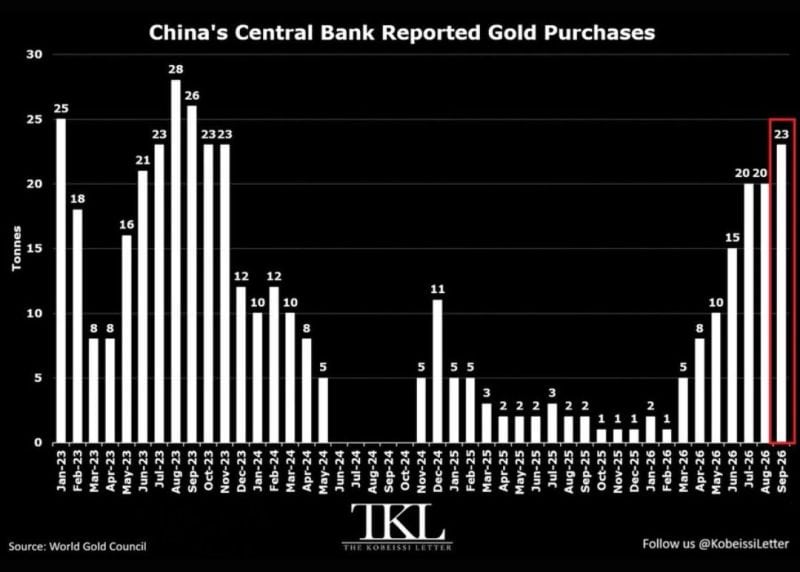
Source: The Kobeissi Letter
Central banks tend to focus on long-term goals, such as diversifying reserves and reducing financial risks.
China has continued building its gold reserves despite the recent price correction.
Read more about China’s gold purchases and the yuan
New Zealand’s Government Debt Interest Bill Has Tripled
A recent video from The New Zealand Initiative shows how much more our government now spends on debt interest.
Annual interest costs have risen from NZ$2.9 billion in 2021/22 to around NZ$9.1 billion in 2025/26.
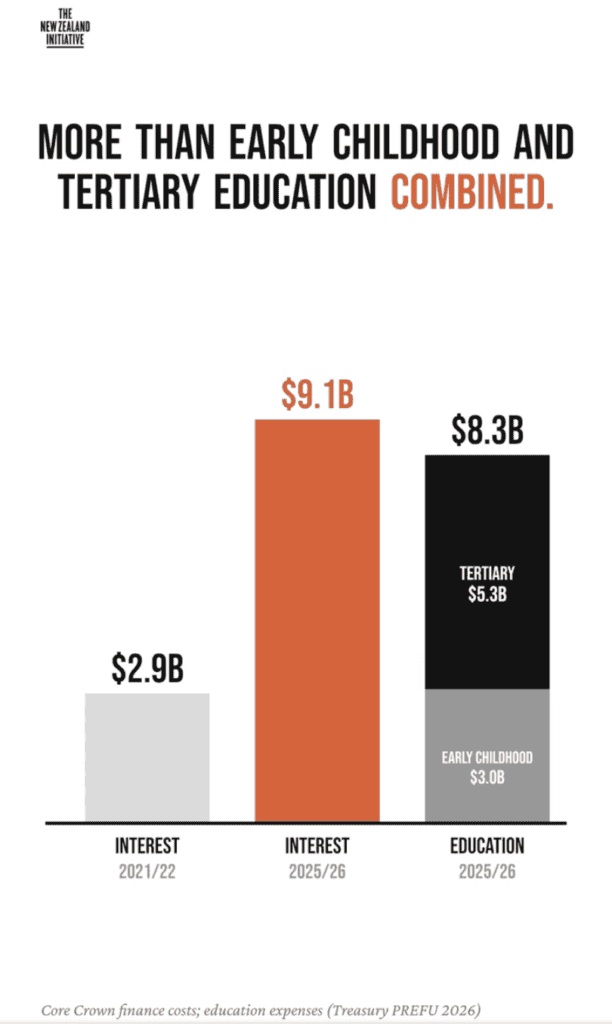
That’s more than the NZ$8.3 billion spent on early childhood and tertiary education combined.
As debt and borrowing costs rise, more government revenue goes towards interest payments. That leaves less money for services and infrastructure.
New Zealand isn’t alone in facing rising debt costs. Such concerns are one reason investors and central banks hold gold to diversify their wealth and reserves.
Yet there’s a striking difference between New Zealand and many other countries: the Reserve Bank of New Zealand holds no gold reserves.
We’ve explored why in a separate article:
Why Doesn’t the Reserve Bank of New Zealand Hold Any Gold?
Gold’s Price Fall Has Been Smaller in New Zealand Dollars
Gold’s 8.5% fall in September was measured in US dollars. The decline was smaller in several other currencies.
Gold fell around 6.5% in euros and 5.6% in Swiss francs.
The weaker New Zealand dollar has had a similar effect here, helping cushion the fall in our local gold price.
That’s because the NZ gold price depends on both the international gold price and the NZD/USD exchange rate.
If gold falls further in US dollars, a weaker Kiwi dollar could offset some of that decline for NZ buyers.
It’s another factor to consider when deciding whether to buy gold now or wait for a lower price.
Chart of the Week: Silver Returns to a Long-Term Trendline
This monthly chart from Tavi Costa, dated 19 September, shows silver pulling back towards a trendline connecting its major peaks in 1980 and 2011.
After breaking above this line, silver returned to test it.
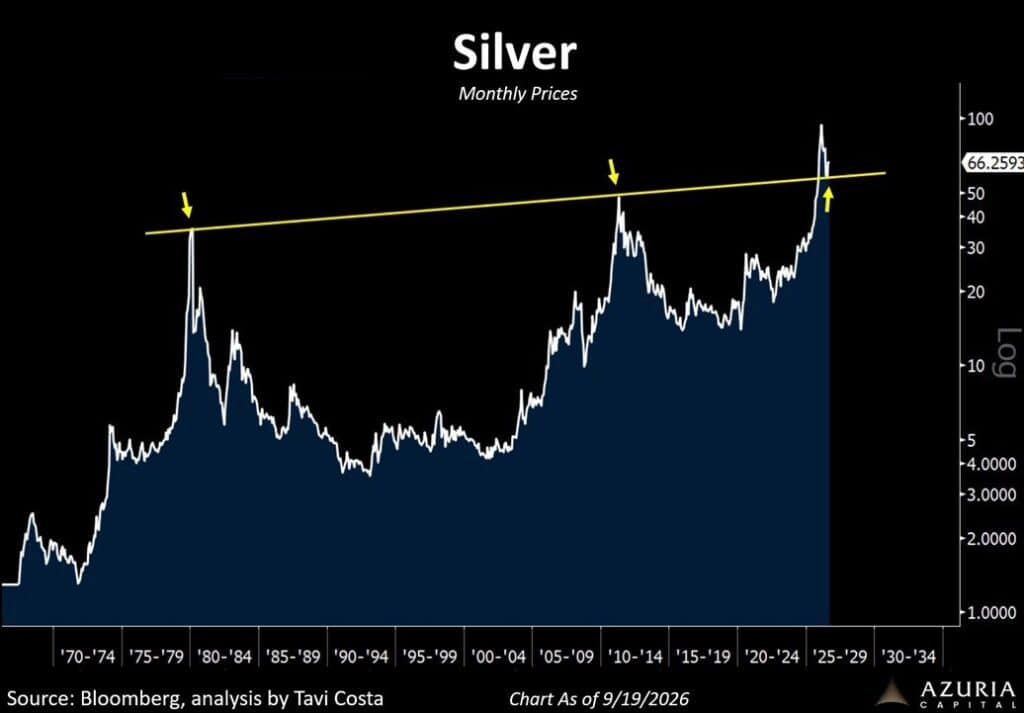
Source: Tavi Costa
Could this former resistance now act as support, or does silver have further to fall?

Glenn's dedication to educating individuals on wealth protection through precious metals has helped over 2400 clients from New Zealand, Australia, USA and Europe to safeguard their financial futures. Passionate about financial independence and lifestyle freedom, Glenn’s mission is to empower others with the knowledge and tools to thrive in today’s volatile economic environment. When he's not advising on precious metals, Glenn enjoys spending time with his family and pursuing outdoor adventures.
Education: University of Auckland Bachelor of Science
Linkedin: https://www.linkedin.com/in/glenn-thomas-0984a4310/
- Gold Prices Fall as ETF Investors and Established NZ Buyers Keep Buying - October 14, 2026
- What Are The Different Types of Gold Bars? - October 13, 2026
- Should I Buy Gold Now or Wait? (2026 NZ Update) - October 12, 2026
