
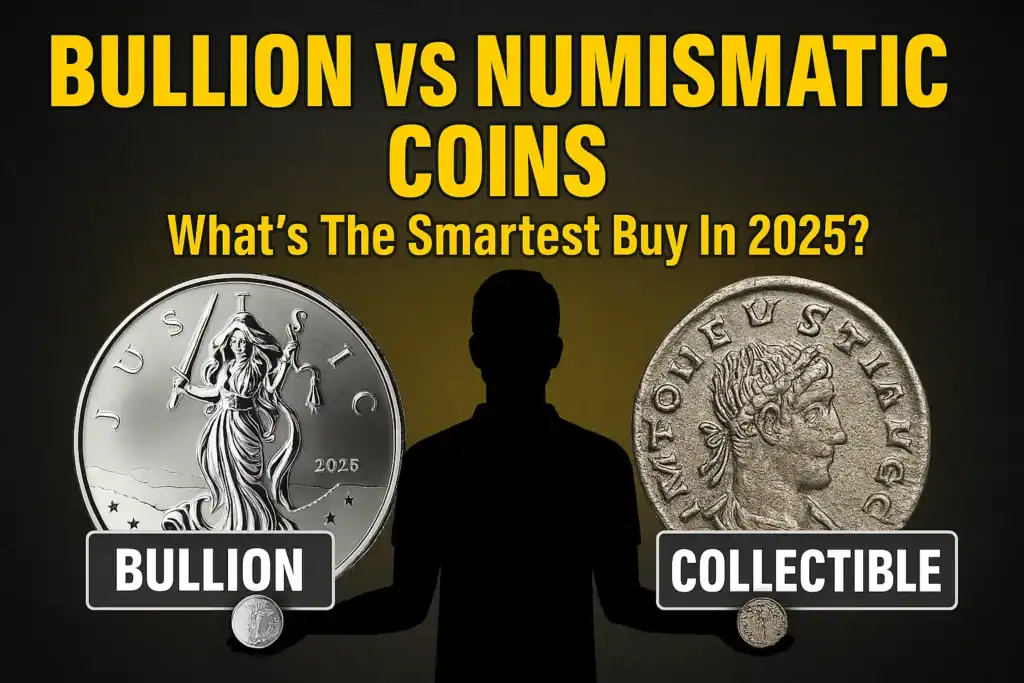
If you’re thinking about investing in gold or silver coins, there’s one question that always comes up:
Should you buy bullion coins — or collectible (numismatic) coins?
It’s a little like choosing between chocolate bars.
A bullion coin is like buying a bar of chocolate for its cocoa content — you’re paying for the substance.
A numismatic coin is like collecting a rare, limited-edition chocolate bar in fancy packaging — its value goes beyond the chocolate itself.
One is priced for its weight.
The other might be worth far more (or far less) depending on its rarity, age, or condition.
So how do you decide what’s right for you?
This guide breaks it down clearly — with the pros, cons, real examples, and a special subscriber-only coin deal that blends the best of both worlds.
Let’s break it down simply.
Quick Answer: Bullion vs Numismatic Coins
For most investors, bullion coins are usually the better choice because they offer lower premiums, easier resale, and direct exposure to the gold or silver price.
Numismatic (collectible) coins can sometimes rise in value faster due to rarity and collector demand, but they are harder to value and typically carry much higher premiums.
Many beginners are best starting with widely recognised bullion coins such as Canadian Maple Leafs, Silver Eagles, Britannias, Philharmonics, or Krugerrands before considering collectible coins.
Table of contents
Estimated reading time: 6 minutes
What Are Bullion Coins?
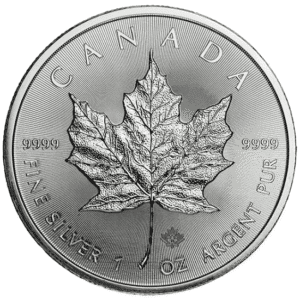
Bullion coins are coins minted by sovereign governments — like the Canadian Maple Leaf, South African Krugerrand, or Austrian Philharmonic — and are valued primarily for their precious metal content.
- They are usually 99.9% pure or higher
- Their price closely tracks the spot price of gold or silver
- They are highly liquid and widely recognised around the world
Why buy them?
To preserve your wealth outside the banking system. Bullion coins are a simple, secure way to hold real money in your hand.
Pros:
- Lower premiums over spot price
- Easy to sell
- Ideal for financial insurance or hedging
Cons:
- No potential for collector value or numismatic upside
- Often in high supply, so less “scarce” appeal
Historically, gold and silver bullion coins were valued primarily for their precious metal content, while rare or collectible coins developed additional value based on scarcity, age, and collector demand.
What Are Numismatic Coins?
Numismatic coins — also known as collectible or rare coins — derive their value from scarcity, historical significance, condition, and demand among collectors.
They may be old, rare, or beautifully designed — and often graded by professional services.
Why buy them?
Collectors or investors looking for long-term appreciation from rarity or historical interest.
Pros:
- Potential for price growth beyond metal content
- Collectible appeal
- Sometimes tax advantages in certain jurisdictions
Cons:
- Harder to value
- Higher premiums above the spot price
- Requires more expertise to avoid overpaying
Key Differences: Bullion vs Numismatic Coins
| Feature | Bullion Coins | Numismatic Coins |
|---|---|---|
| Value Driven By | Precious metal content | Rarity, grading, and collector demand |
| Premium Over Spot | Low | High |
| Resale Ease | High (very liquid) | Medium to low |
| Risk Level | Low | Higher (especially for beginners) |
| Ideal For | Hedging, financial insurance | Collecting, speculative investing |
| Requires Special Knowledge | No | Yes |
You may also be interested in: What Use Will Silver Coins be in New Zealand in a Currency Collapse?
Is There a Middle Ground? Introducing Semi-Numismatic Coins
Yes — some coins straddle the line between bullion and collectible. These are often called semi-numismatic coins.
They’re usually:
- Limited mintage (e.g. under 100,000)
- Legal tender from a sovereign mint
- Beautifully designed
- Still sold close to spot price
They offer a hybrid appeal: the affordability and recognisability of bullion, with the potential scarcity and upside of collectibility.
Semi-Numismatic Coin Deal: Pay Less Than Bullion for a Limited Mintage Coin
Right now, due to high global demand, most major bullion coins — like Maples, Britannias, and Krugerrands — are sold out or facing delays.
So we’ve secured an alternative for our subscribers:
2025 Niue Lady Justice 1oz Silver Coin — Subscriber Special
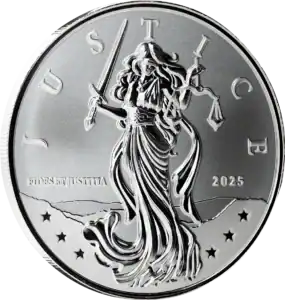
“Lady Justice has her scales in balance — and so can your silver stack.”
Details:
- 1 Troy Ounce of 999 Fine Silver
- Legal Tender in Niue Island
- Limited Mintage: Just 50,000 Coins Worldwide
- Sealed in Coin Zip Bag/Tubes of 20
- Minted by Scottsdale Mint — a respected global name
- Diameter: 38.8mm
This coin fits the semi-numismatic definition: it’s low mintage, beautifully struck, and sovereign-backed — yet it’s currently priced lower than most bullion coins.
Why This Coin?
- Lowest priced legal tender silver coin available right now
- Smaller supply = stronger resale potential in future
- Recognised and trusted mint
- Available now — no delays or backorders
Available in:
- Tubes of 20 coins
- Monster boxes of 500 coins
🟡 Subscriber-Only Offer
This deal is not available on our public shop page.
If you’re a newsletter subscriber, you get first dibs.
To check pricing or reserve your coins:
📞 Call 0800 888 465 or contact us here
Once they’re gone, they’re gone.
Final Thoughts: What We Recommend
At Gold Survival Guide, our mission is to educate first, sell second.
For most investors, bullion coins are the foundation of a strong precious metals strategy.
For investors focused on wealth preservation and long-term financial insurance, simple low-premium bullion coins are usually the safest and most liquid starting point.
But when opportunities arise to buy limited mintage coins at, or below, bullion coin-level pricing, it makes sense to take the deal.
The 2025 Niue Lady Justice silver coin is exactly that kind of opportunity — a low-premium, high-quality, limited-supply coin from a top-tier mint.
Contact us to secure yours today.
FAQs
Bullion coins are best for beginners — they’re easier to understand, buy, and sell.
Not always. They can, but only if collector demand increases. Bullion coins move with the price of silver or gold.
It’s a limited mintage coin that’s still priced close to spot — a blend of bullion and collectibility.
It offers great value right now: a limited mintage, legal tender silver coin from a reputable mint — for less than most bullion coins.
Want Deals Like This Every Week?
Sign up for our free weekly newsletter to get:
- The latest gold & silver market updates
- Educational guides and insights
- Early access to subscriber-only deals like the Lady Justice coin
-> Subscribe to Our Newsletter Here
Related Resources
How to Store Gold and Silver Safely
Paper Gold vs Physical Gold: What Should You Buy?
What Percentage of Gold and Silver Should Be in My Portfolio?
Gold and Silver Spot Price and Premiums Explained

Glenn's dedication to educating individuals on wealth protection through precious metals has helped over 2400 clients from New Zealand, Australia, USA and Europe to safeguard their financial futures. Passionate about financial independence and lifestyle freedom, Glenn’s mission is to empower others with the knowledge and tools to thrive in today’s volatile economic environment. When he's not advising on precious metals, Glenn enjoys spending time with his family and pursuing outdoor adventures.
Education: University of Auckland Bachelor of Science
Linkedin: https://www.linkedin.com/in/glenn-thomas-0984a4310/
- Why Buy Gold? A New Zealand Guide to Protecting Your Wealth - August 11, 2026
- When the Crowd Loses Interest, Who Keeps Buying? - August 5, 2026
- If the US Dollar Was Linked to Gold Again, What Would It Mean for New Zealand? - August 3, 2026

Dear Sir/Madam
Thank you for your interesting article comparing the investment opportunities of limited mintage coins to bullion coins.
Could you please confirm the prices of Canadian Maples as stated in your article
as retailed by yourselves at NZ$2-3 above spot (quoted spot NZ$25). At NZ$28 I am a buyer. You didn’t mention quantity so I presume there is no restriction.
Please let me know.
Thank you.