
Gold
Gold Discoveries Hit Zero as Mine Production Reaches Record High

Aug
This Week:
Estimated reading time: 6 minutes
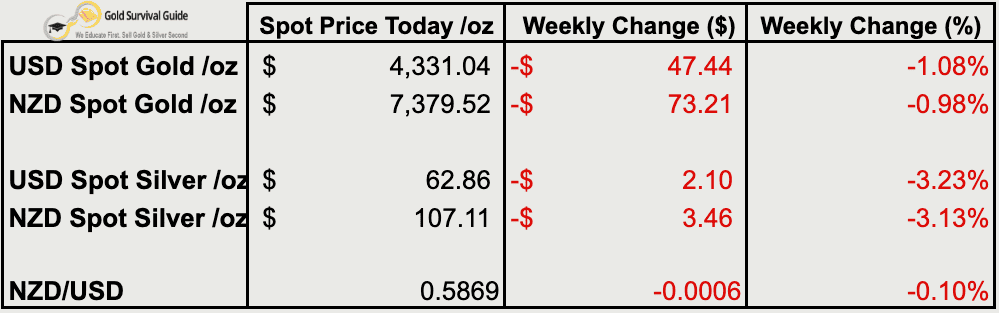
📊 Weekly Price Overview – 19 August 2026
Precious metals pulled back after last week’s strong gains. Gold and silver are consolidating after breaking their recent downtrends, with signs still pointing to the lows being in.
🟡 NZD gold fell $73 (-0.98%) to $7,380
NZD gold is consolidating above its 50-day moving average after breaking its downtrend. $7,500 and the 200-day moving average near $7,700 remain the next areas to watch.
USD gold fell $47 (-1.08%) to $4,331
USD gold is consolidating after breaking its downtrend. A bottom around $4,000 remains likely, with the 200-day moving average near $4,500 the next resistance level.
⚪ NZD silver fell $3.46 (-3.13%) to $107.11
NZD silver is consolidating above its 50-day moving average and looks to have bottomed at long-term support. It remains in an attractive long-term buying zone.
USD silver fell $2.10 (-3.23%) to $62.86
USD silver is consolidating after breaking its downtrend and may have bottomed around $55. It remains in a good long-term buying zone.
💱 NZD/USD fell 6 basis points (-0.10%) to 0.5869
The Kiwi dollar remains within its long-term downtrend, helping support local precious metals prices. A break above 0.61 is still needed to signal a change in trend.
When You Own Gold, What Do You Actually Own?
Buying gold doesn’t always mean owning gold.
Physical bullion, ETFs, futures and other forms of “paper gold” can all give you exposure to the gold price. But what you actually own — and the risks you take on — can be very different.
That may not matter much in normal markets. But if you’re buying gold as wealth insurance, rather than simply hoping to profit from a rising gold price, those differences become much more important.
So, which type of gold is best suited to the job you want it to do?
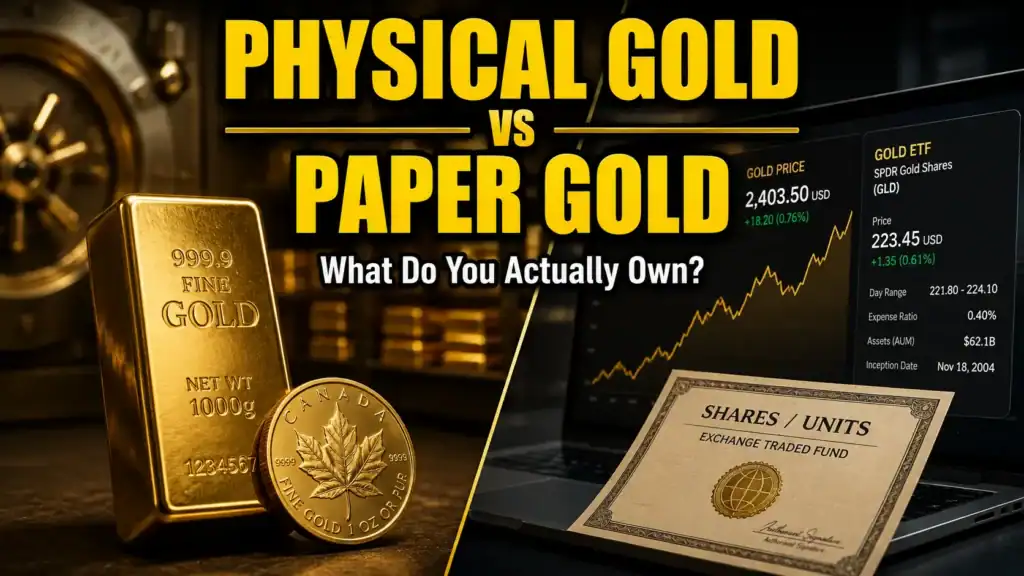
Read: Physical Gold vs Paper Gold – Which Should You Own?
Investors Are Piling Into Gold Miners — But Miners Aren’t Gold
Retail investors appear to be rediscovering gold-mining shares.
According to investment analyst Matt Oliver, the GDX gold miners ETF saw another US$9 million of retail inflows last Wednesday. Its sixth daily inflow in seven sessions.
GDX had attracted US$419 million for the month at the time of his post, putting it on track for its strongest monthly inflows since February.
Meanwhile, Barrick Mining shares fell almost 10% following its quarterly results. Yet the gold price held firm after a stronger-than-expected US jobs report. [Source: Pieter Borsje]
A mining company gives you exposure to gold, but also to operating costs, management decisions, capital requirements, political risk and the performance of individual mines.
Those extra variables can amplify returns when things go well. They can also work against you even when the gold price itself is doing just fine.
A Gold Portfolio With No Physical Gold?
A story in the latest Weber Report caught our attention this week.
Chris Weber received a letter from the daughter of a long-time subscriber who had recently died. She had inherited his portfolio but knew little about how it worked.
Among her father’s holdings were GLD and SLV (ETFs providing exposure to gold and silver), along with the gold-mining ETFs GDX and GDXJ.
There was no evidence that her father had owned physical gold or silver.
Weber doesn’t dismiss the ETFs. In fact, he says holding them is “certainly better than nothing”. But his preference is to own some of the actual metal where practical. He ultimately suggests combining physical precious metals with diversified exposure to mining companies.
A portfolio can contain plenty of gold exposure without containing any actual gold.
The Gold Was Real. But Could Anyone Use It?
In 1857, the SS Central America sank during a hurricane while carrying a substantial shipment of Californian gold to New York.
The loss helped intensify an already developing financial panic.
The gold hadn’t ceased to exist. It was simply sitting at the bottom of the Atlantic rather than where banks and businesses needed it.
GoldCore recently drew a parallel with the disruption to the gold market in 2020. Gold existed and buyers wanted it, but refinery shutdowns and disrupted transport made it harder to get the right gold, in the right form, to the right place.
Choosing to own physical bullion is only part of the decision.
Where is it stored? How quickly can you access it? How readily can it be sold? And what systems or counterparties are you relying on when you need to do so?
GoldCore describes this as finding a balance between ownership, liquidity and resilience.
Read: The Gold Was Real, But The Liquidity Was Not
CHART OF THE WEEK: Two Years. Zero Major Gold Discoveries.
Gold miners produced a record amount of gold last year.
According to figures highlighted by Money Metals, global production reached 3,672 tonnes in 2025.
Despite reaching a new record, production increased by only around 11 tonnes from the previous year.
At the same time, another chart shared this week by economist Ryan LeMand shows how few major new gold discoveries are being made.
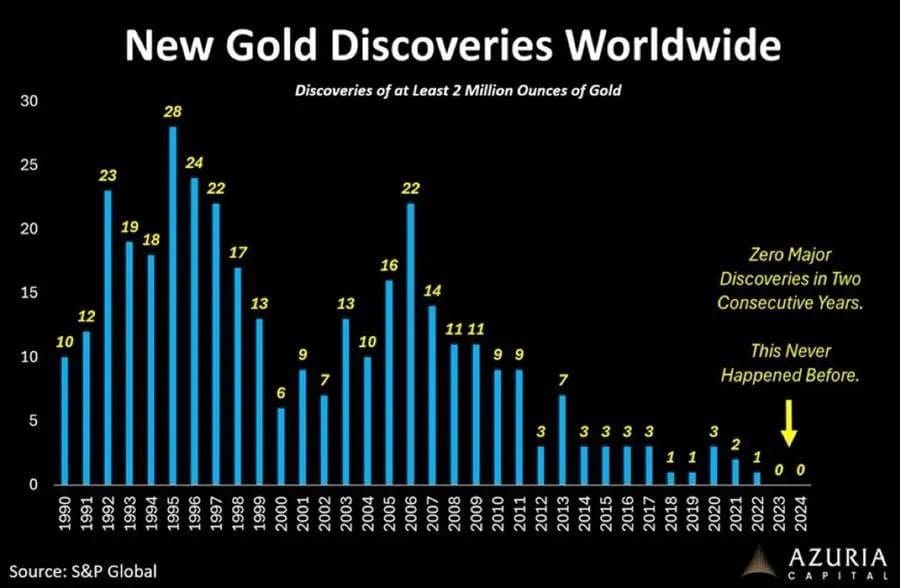
Source: S&P Global / Azuria Capital LLC
According to S&P Global data, there were zero major gold discoveries in 2023 — and zero again in 2024.
The chart shows just how dramatically major discoveries have declined since the 1990s.
That doesn’t mean we’re about to run out of gold.
Existing mines can operate for many years, resources can be expanded, and higher gold prices can make previously uneconomic deposits viable.
But new mines take years to discover, permit, finance and develop.
Today’s miners are producing more gold than ever.
Where will tomorrow’s gold come from?
We can’t tell you that. But if you’d like to own some of today’s, get in touch.

Glenn's dedication to educating individuals on wealth protection through precious metals has helped over 2400 clients from New Zealand, Australia, USA and Europe to safeguard their financial futures. Passionate about financial independence and lifestyle freedom, Glenn’s mission is to empower others with the knowledge and tools to thrive in today’s volatile economic environment. When he's not advising on precious metals, Glenn enjoys spending time with his family and pursuing outdoor adventures.
Education: University of Auckland Bachelor of Science
Linkedin: https://www.linkedin.com/in/glenn-thomas-0984a4310/
- What Type of Gold Bar Should I Buy? (Best Sizes, Brands & Bars Explained) - October 20, 2026
- Gold Prices Fall as ETF Investors and Established NZ Buyers Keep Buying - October 14, 2026
- What Are The Different Types of Gold Bars? - October 13, 2026
