
Gold
NZ Inflation Could Hit 4.5%: What It Means for Gold

Oct
This Week:
Estimated reading time: 8 minutes
📊 Weekly Price Overview – 21 October 2026
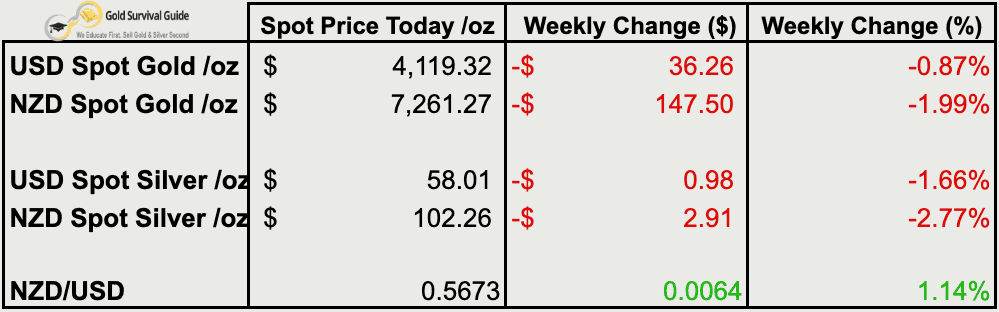
Gold and silver fell this week. A stronger Kiwi dollar added to the falls in NZ dollar terms.
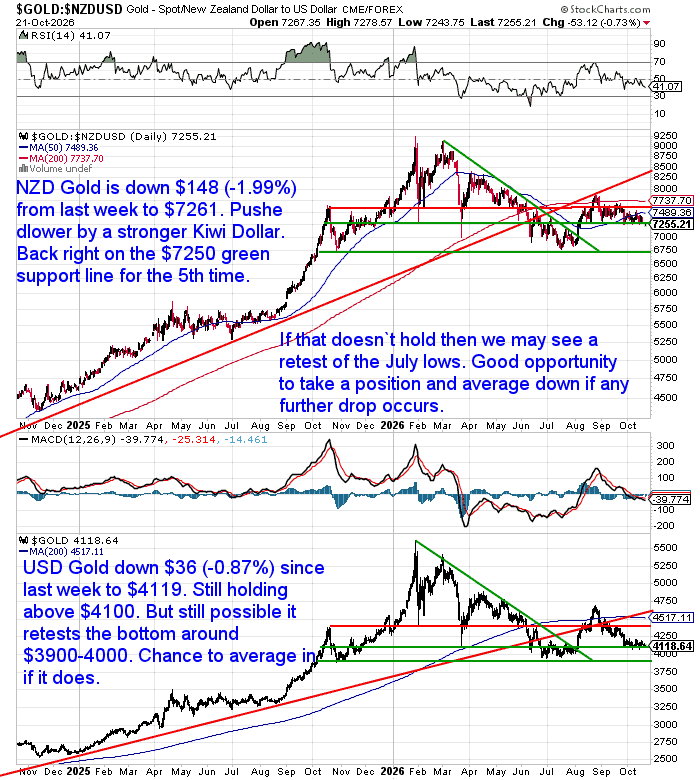
🟡 NZD gold fell $148 (-1.99%) to $7,261
NZD gold is back near support at $7,250 for the fifth time. If this breaks, the July lows could be tested.
USD gold fell $36 (-0.87%) to $4,119
USD gold remains above $4,100. A further fall could see support around 3,900–4,000 tested.
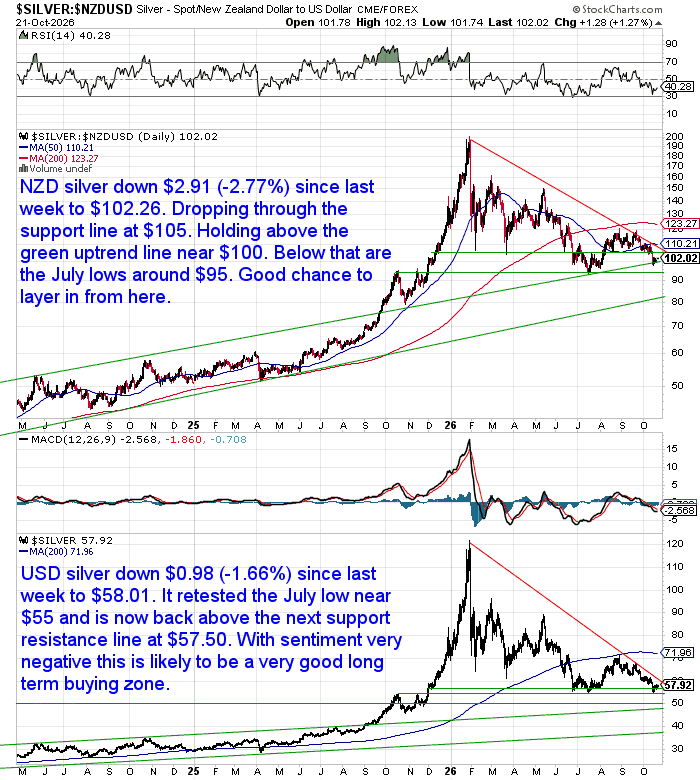
⚪ NZD silver fell $2.91 (-2.77%) to $102.26
NZD silver has fallen below support at $105. It remains above the rising trendline near $100. Below that, support sits around $95.
USD silver fell $0.98 (-1.66%) to $58.01
USD silver has bounced off the July lows near $55. It is now back above $57.50, which may provide support.
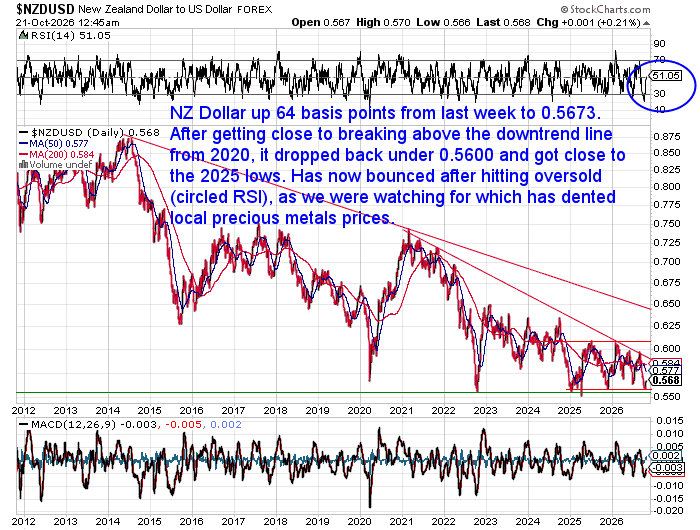
💱 NZD/USD rose 64 basis points (+1.14%) to 0.5673
The Kiwi dollar has bounced from near its 2025 lows. It remains below its long-term downtrend line, despite recovering from oversold levels.
Which Gold Bar Should You Buy? Bigger Isn’t Always Better
Decided to buy gold bars? The next question is which type to choose.
Should you buy one large bar or several smaller ones? Are well-known international brands worth paying extra for? And does a more expensive minted bar offer any real advantage over a simple cast bar?
The cheapest gold per ounce isn’t always the best choice, especially when it comes time to sell.
In this week’s featured article, we compare the different sizes, brands and types of gold bars, and explain what New Zealand buyers should consider before making a purchase.
What Type of Gold Bar Should I Buy? (Best Sizes, Brands & Bars Explained)

Inflation, Gold Buying and the Changing Monetary System
Inflation May Be Down, But the Damage Is Done
I heard something interesting on Radio Hauraki’s Breakfast Show this morning.
The hosts were comparing the price of a KFC meal in 2017 with what it costs today. The chat began with the cost-of-living protests in France. But it soon turned to how much everyday prices have risen here in New Zealand.
Even on a rock music station, inflation is a talking point.
And while inflation rates may have fallen, most prices haven’t. They’re simply rising more slowly.
But there may be more price rises ahead.
ASB expects New Zealand’s annual inflation rate to reach around 4.5% by the end of 2026. It also expects inflation to remain higher in 2027 than the Reserve Bank currently forecasts.
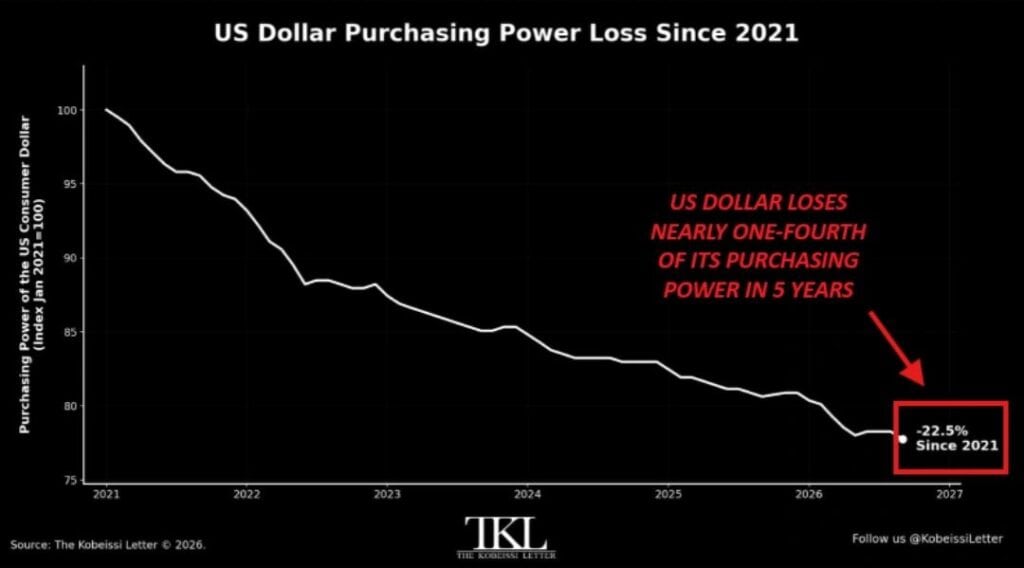
The Kobeissi Letter recently reported that US inflation has stayed above 2% for 67 straight months.
It also estimates the US dollar has lost 22.5% of its purchasing power since January 2021.
That means something costing US$100 back then would now cost roughly $129.
Inflation also eats into investment returns.
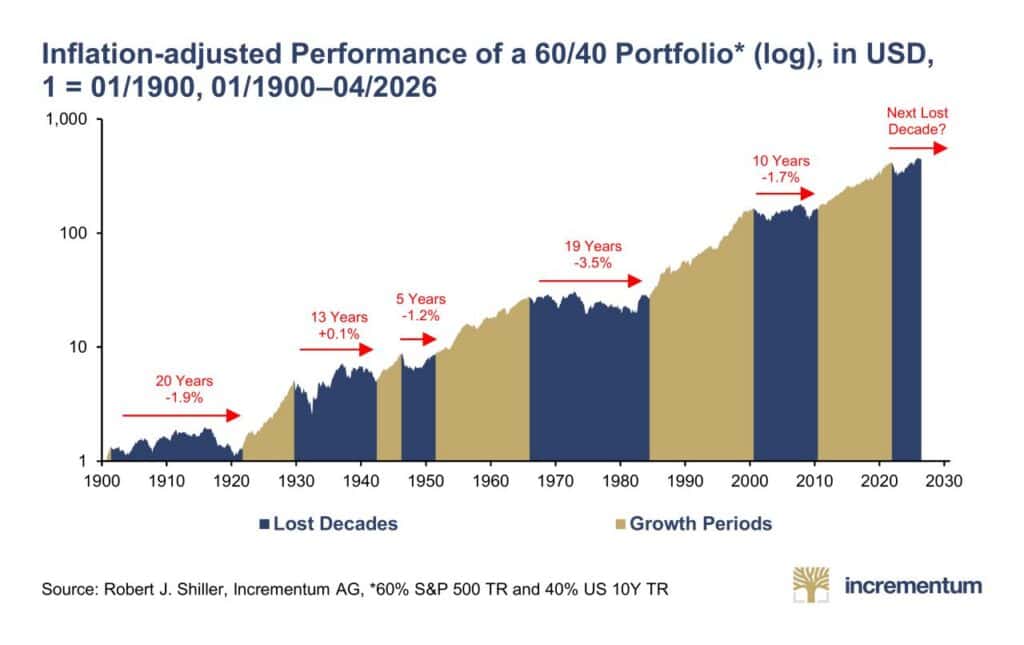
The latest In Gold We Trust report shows five periods since 1900 when a portfolio of 60% shares and 40% bonds made little progress after inflation. Some lasted close to 20 years.
Tavi Costa of Azuria Capital believes inflation could stay high for much of the next decade. He also expects central banks to face pressure to cut interest rates. That’s because governments need to keep their borrowing costs under control.
If he’s right, the result could favour hard assets such as gold and silver.
From Family Offices to Central Banks: Who’s Buying Gold?
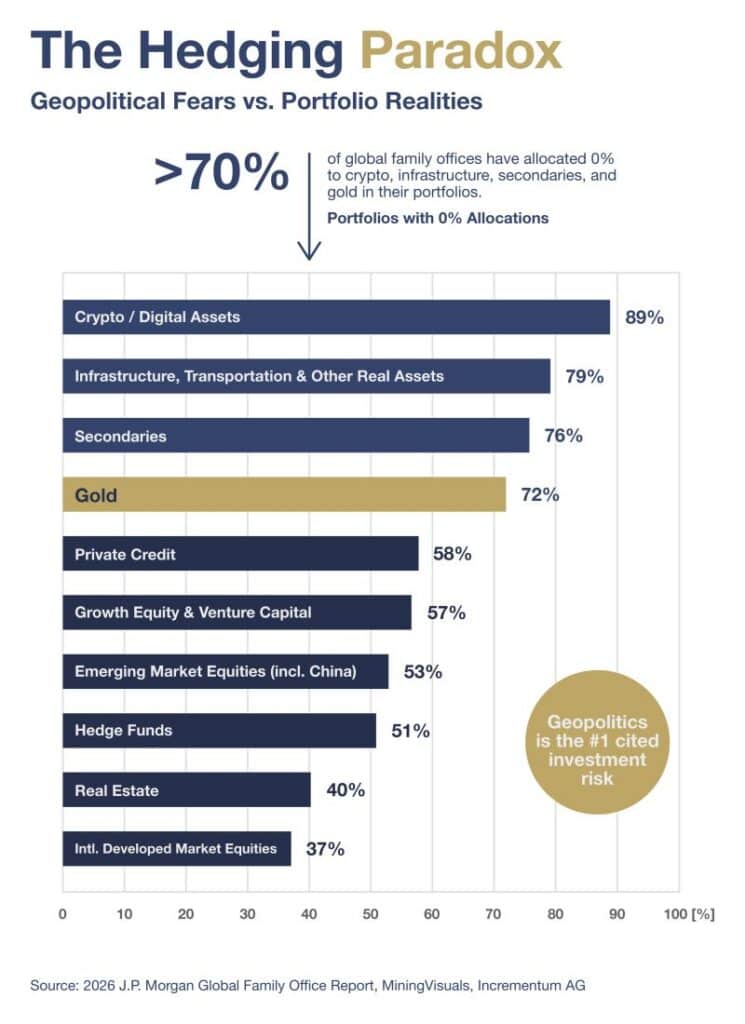
According to J.P. Morgan’s 2026 Global Family Office Report, 72% of the 333 family offices surveyed hold no gold.
The average gold allocation across all those surveyed was just 0.9%.
Source: In Gold We Trust Report
It raises an interesting question: How Many People Own Gold? We explored this in more detail last month.
Billionaire investor Ray Dalio takes a different approach.
Dalio has long recommended holding 10–15% of a portfolio in gold to help protect against economic and monetary risks.
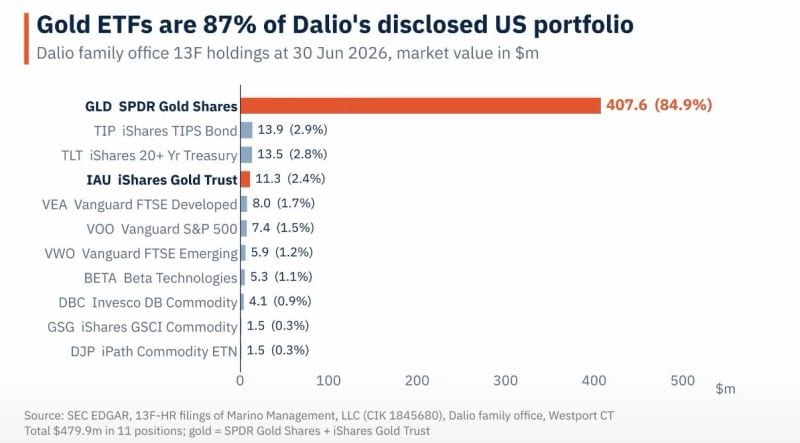
Yet gold-related funds made up 87.3% of the US securities reported by his family investment firm as of 30 June 2026.
The two holdings were worth almost US$419 million out of a reported US$480 million.
These figures come from US securities filings. They don’t include the family’s entire wealth, cash, property or investments held elsewhere.
Source: Tavi Costa
For a wider look at the issue, see our guide to gold and silver portfolio allocation.
Governments have their own reasons for holding gold.
One analysis of official US trade figures estimates net exports of nonmonetary gold reached around US$61 billion in the first eight months of 2026.
Russia has also announced plans to increase purchases of gold and foreign currency. And China continues to add gold to its reserves.
Part of the reason may be concern about holding assets that another country can freeze.
After Russia invaded Ukraine in 2022, Western governments froze access to much of its foreign currency reserves.
Gold stored within a country’s own borders offers more direct control. It is less exposed to foreign sanctions or restrictions on access.
New Zealand remains an exception.
As we covered in How Much Gold Does the Reserve Bank of New Zealand Have?, the answer is none.
So while many countries see gold as an important part of their national financial security, our central bank still chooses not to.
Could Gold Play a Bigger Role in the Monetary System?
Economist Dr Judy Shelton has proposed a new type of US government bond linked to gold.
Her idea is for 50-year Treasury bonds that investors could redeem in dollars or a set amount of gold.
This could appeal to investors who worry about the dollar losing value over time.
Vince Lanci of GoldFix has suggested another possible benefit.
Gold-linked bonds might appeal to China, while helping the US attract buyers for its government debt.
For now, it’s an idea rather than an announced US government policy.
You can watch Judy Shelton discuss her proposal with Ronnie Stöferle here.
There’s also renewed talk about revaluing America’s official gold reserves.
The US government still values its gold at just US$42.22 per ounce on its books. That’s far below today’s market price.
Ronnie Stöferle, co-author of the In Gold We Trust report, has raised his estimated chance of a US gold revaluation from 10–15% to over 50%.
He explains why in this recent interview with Maggie Lake.
We’ve also covered what such a move might mean in Could the US Revalue Its Gold Reserves?.
From family offices to central banks, gold is being used for different reasons.
Some want to protect purchasing power. Others want to reduce their reliance on foreign currencies and financial systems.
And proposals for gold-linked government debt and a possible US gold revaluation show that gold’s role in the monetary system is still being debated.

Glenn's dedication to educating individuals on wealth protection through precious metals has helped over 2400 clients from New Zealand, Australia, USA and Europe to safeguard their financial futures. Passionate about financial independence and lifestyle freedom, Glenn’s mission is to empower others with the knowledge and tools to thrive in today’s volatile economic environment. When he's not advising on precious metals, Glenn enjoys spending time with his family and pursuing outdoor adventures.
Education: University of Auckland Bachelor of Science
Linkedin: https://www.linkedin.com/in/glenn-thomas-0984a4310/
- NZ Inflation Could Hit 4.5%: What It Means for Gold - October 21, 2026
- What Type of Gold Bar Should I Buy? (Best Sizes, Brands & Bars Explained) - October 20, 2026
- Gold Prices Fall as ETF Investors and Established NZ Buyers Keep Buying - October 14, 2026
