
This Week
Estimated reading time: 6 minutes
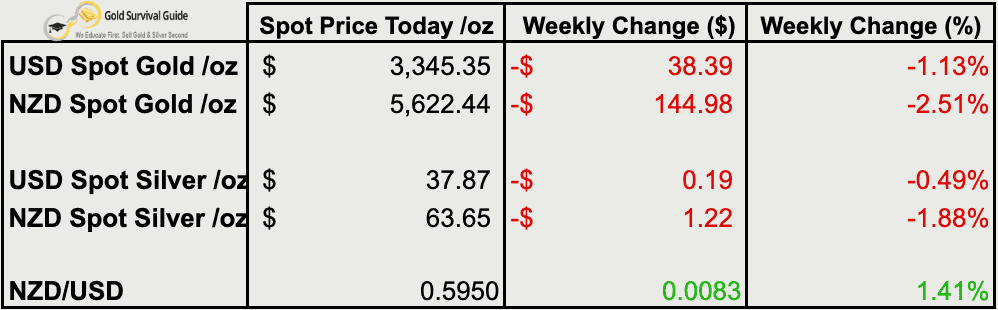
Weekly Price Overview – 13 August 2025
A strong Kiwi pressured local gold and silver despite firm USD metals.
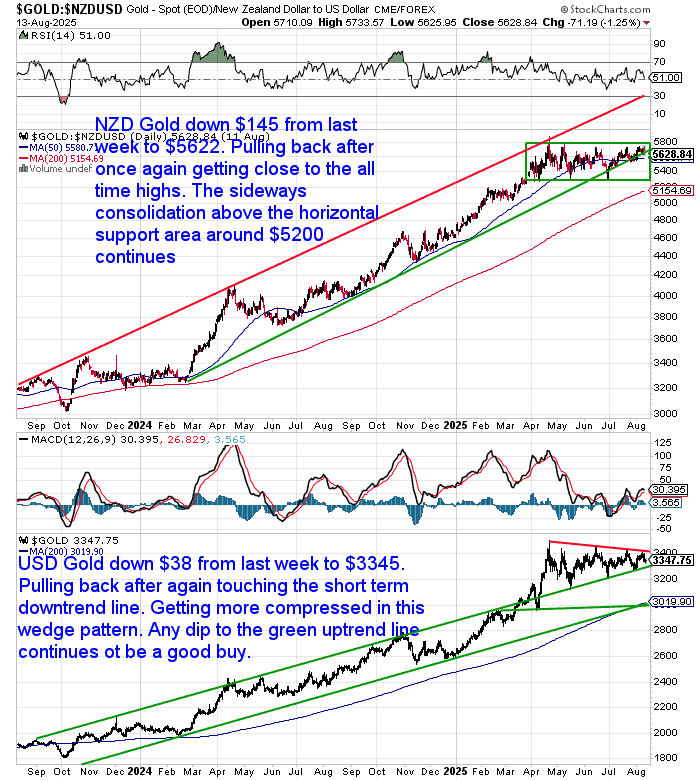
🟡 NZD gold fell $145 to $5,622.44 (-2.51%), continuing its sideways consolidation above key support at $5,200. USD gold dropped $38 to $3,345.35 (-1.13%) but remains well-supported above its green uptrend line.
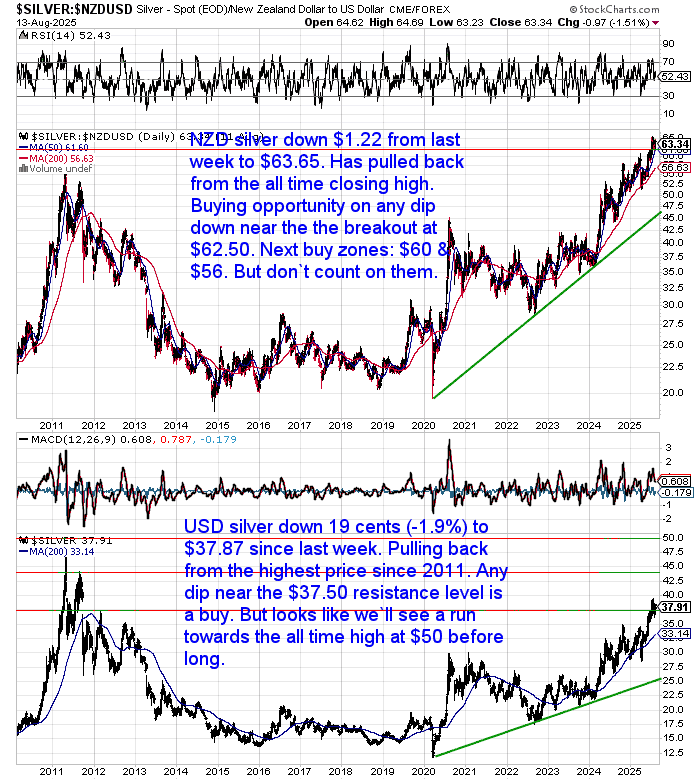
⚪ NZD silver slid $1.22 to $63.65 (-1.88%), pulling back from record highs but staying well above its breakout zone near $62.50. USD silver eased $0.19 to $37.87 (-0.49%), holding just under resistance at $37.50 with $50 still in sight.
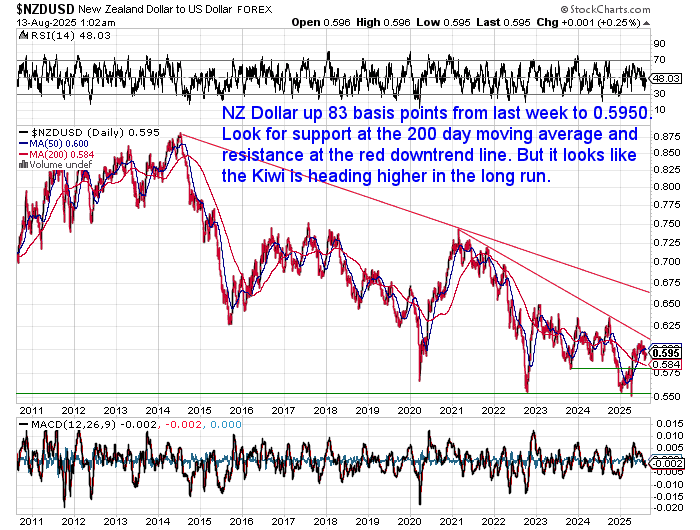
💱 The NZD/USD rose 83 basis points (+1.41%) to 0.5950, now testing resistance at its red downtrend line. Long-term momentum suggests the Kiwi could be heading higher.
📈 Technicals show gold consolidating in tight ranges and silver pausing near highs. Any dips toward major support zones still look like buying opportunities — particularly for silver in both USD and NZD terms.
Gold Tariff Scare: What Changed — and What Didn’t
Tariffs on gold were the big news this past week. It was no, then yes, then no — prices whipsawed on shifting headlines. In this week’s feature article we unpack what actually changed, what didn’t. Plus, the simple steps to keep your wealth plan steady if headlines flip again.

ASB: Tariffs Could Linger, RBNZ Likely to Cut Below 3%
This week brought another trade shock: the US has slapped a 15% tariff on around NZ$9 billion of our exports. Up from the previously announced 10%. ASB’s latest report says it’s a big hit for beef, dairy, and wine — together half of what we send Stateside — and while services are spared for now, the tariffs could stick around longer than anyone hopes. With Washington potentially raking in US$30–50 billion a month from its new tariffs, ASB warns they could be “sticky” and become part of the landscape. ASB expect the RBNZ to shift from brake to accelerator, with rates likely heading below 3% by year-end to soften the blow.
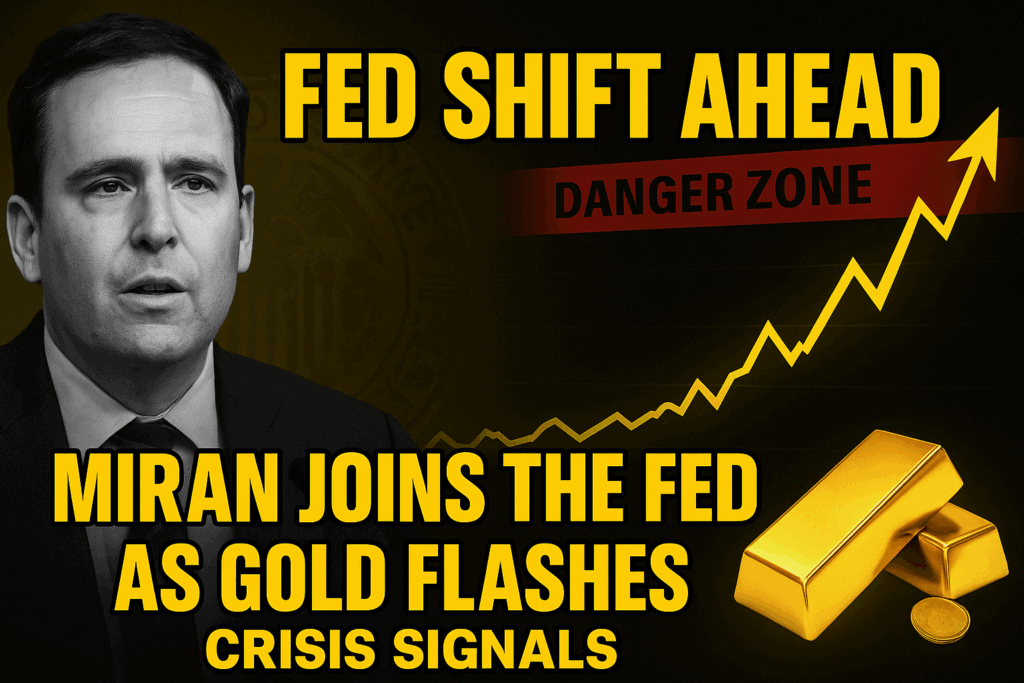
Stephen Miran at the Fed: What It Could Mean for the Dollar – and for Gold
Back in February, we covered Stephen Miran’s Trade Policy Blueprint in our article The Coming Global Trade Reset. His main goal was clear: weaken the US dollar to help exports and rebalance trade, but still keep the dollar as the world’s reserve currency. That’s a tricky task. A dollar that’s too weak risks losing global confidence. A dollar that’s too strong hurts US exports.
Now, President Trump has nominated Miran to fill a vacant seat on the Federal Reserve Board. One vote on the FOMC won’t shift policy overnight, but it could influence the tone inside the Fed. Miran has said that tariffs don’t always cause inflation. He has also backed ideas that would make the Fed more responsive to White House trade goals. If those views carry through, we could see more pressure for lower interest rates and a softer dollar over time.
Why does this matter for gold? Three main reasons:
1️⃣ Weaker USD means higher gold pricing power. Gold is priced in US dollars worldwide. If the dollar falls, gold becomes cheaper for buyers using other currencies. That often pushes the USD gold price higher.
2️⃣ Trade and currency uncertainty boosts safe-haven demand. When the Fed’s independence is questioned or trade policy becomes more political, investors often turn to gold as a hedge.
3️⃣ Reserve currency risk encourages diversification. Trying to weaken the dollar while keeping its reserve status is a gamble. If it fails, central banks and investors may hold more gold to protect their wealth.
Miran’s appointment is more than just a staffing change. It could be a sign that US trade, currency, and monetary policy are moving in the same direction. In that environment, gold’s role as a store of value and portfolio insurance may only grow stronger.
Chart(s) of the Week: Gold Flashing Major Warning Signs
Two very different charts are pointing to the same conclusion — capital is quietly but steadily moving away from risk assets and into gold.
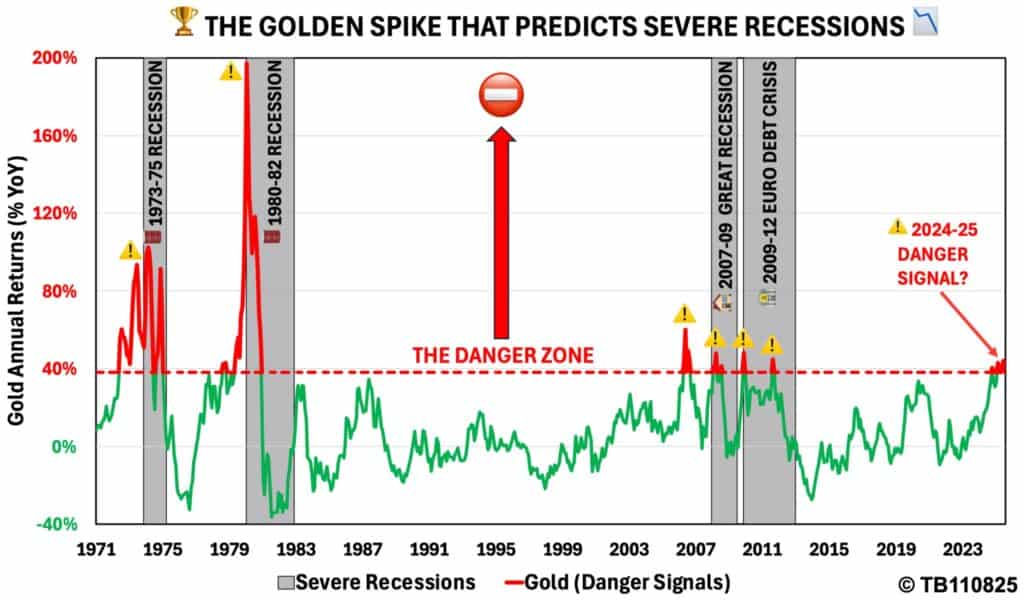
1️⃣ Tom Bradshaw’s “Danger Zone” Signal
Gold has now surged above the 40% annual return threshold — a level Tom calls the “Danger Zone.” In the past 50 years, every spike has preceded a major recession. Gold’s recent rally suggests deep systemic concerns are brewing beneath the surface of the economy.
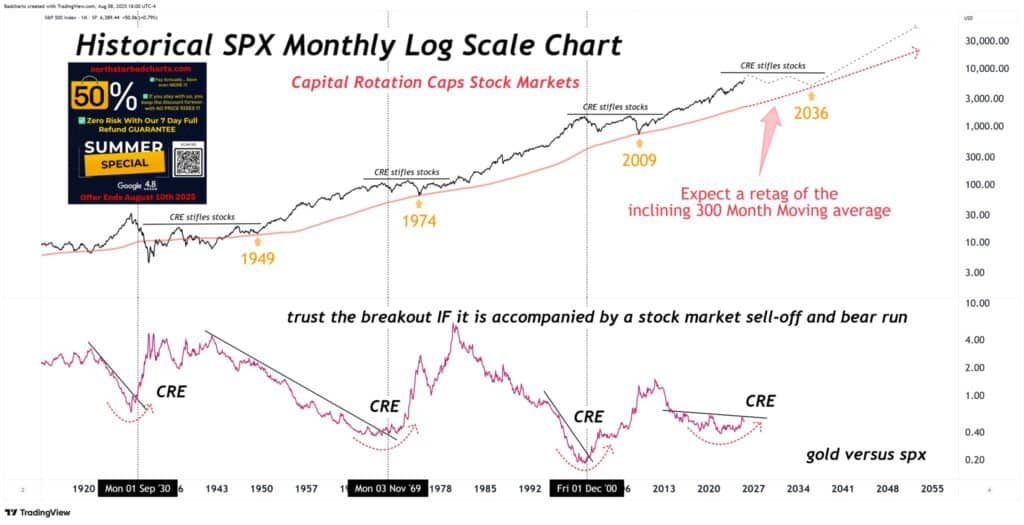
2️⃣ Patrick Karim’s Gold vs S&P 500 Trend
Despite the recent US stock market bounce, when measured against gold, equities remain in a long-term downtrend. This is classic “capital rotation” — where smart money gradually moves from overvalued stocks into the relative safety of gold.
The Takeaway
Gold isn’t simply reacting to headlines — it’s sending a broader warning about market stress and possible economic trouble ahead. Historically, these signals have not been false alarms.
With tariffs shaking trade flows, policy shifts brewing at the Fed, and gold flashing historic warning signals, the months ahead could be anything but calm. Whether you see the recent pullbacks as buying opportunities or signs to stay cautious, preparation is key. Review your wealth plan now — and if you need help positioning in gold or silver, we’re here to guide you through whatever comes next.

Glenn's dedication to educating individuals on wealth protection through precious metals has helped over 2400 clients from New Zealand, Australia, USA and Europe to safeguard their financial futures. Passionate about financial independence and lifestyle freedom, Glenn’s mission is to empower others with the knowledge and tools to thrive in today’s volatile economic environment. When he's not advising on precious metals, Glenn enjoys spending time with his family and pursuing outdoor adventures.
Education: University of Auckland Bachelor of Science
Linkedin: https://www.linkedin.com/in/glenn-thomas-0984a4310/
- Why Buy Gold? A New Zealand Guide to Protecting Your Wealth - August 11, 2026
- When the Crowd Loses Interest, Who Keeps Buying? - August 5, 2026
- If the US Dollar Was Linked to Gold Again, What Would It Mean for New Zealand? - August 3, 2026
