
Table of contents
Estimated reading time: 6 minutes
Weekly Price Overview – 24 June 2026
Precious metals pulled back sharply this week after last week’s rebound. Gold and silver both retested key support zones highlighted previously. While further volatility is possible, prices are now back in areas that appear attractive for long-term accumulation.
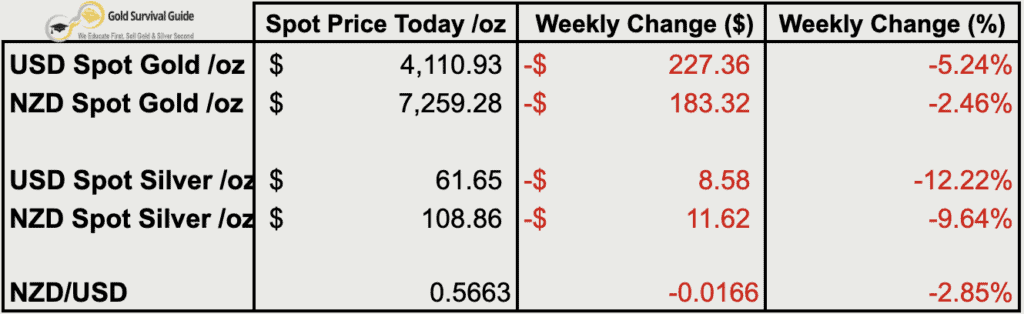
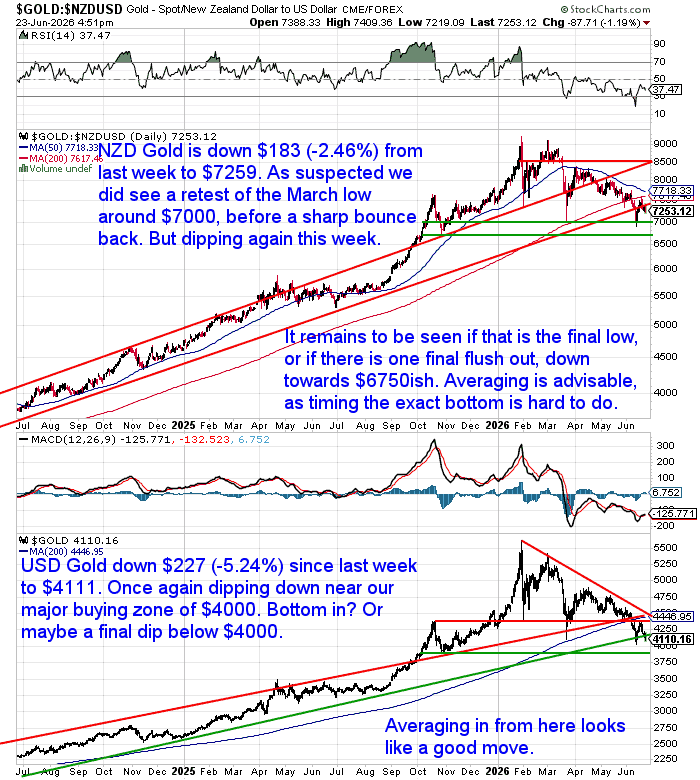
🟡 NZD gold fell $183 (-2.46%) to $7,259
NZD gold dropped back after last week’s bounce and remains near major support around $7,000. A final flush towards $6,750 remains possible, but this continues to look like a zone where averaging in makes sense.
USD gold fell $227 (-5.24%) to $4,111
USD gold retreated back towards the key $4,000 support zone. The correction is now well advanced. Whether the final low is in remains unclear, but averaging in from current levels looks sensible.
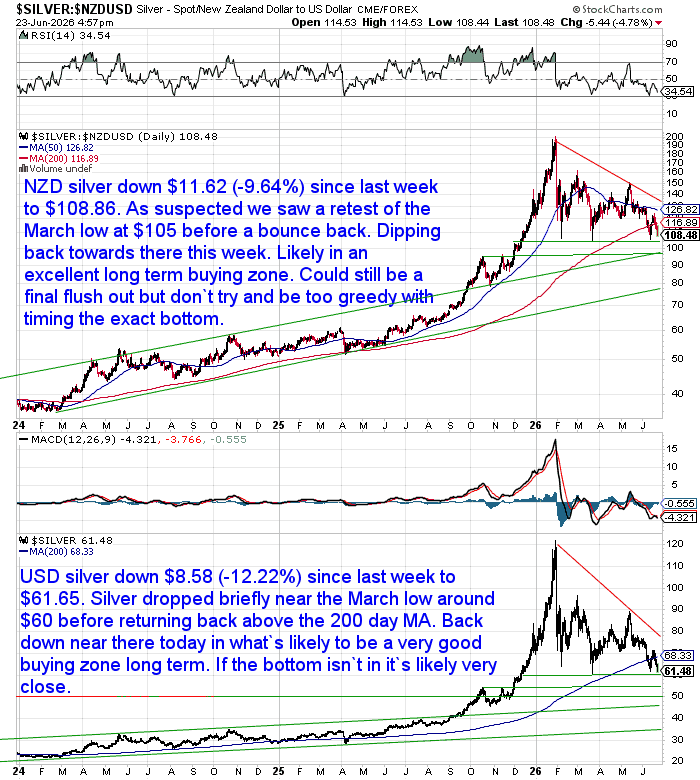
⚪ NZD silver fell $11.62 (-9.64%) to $108.86
NZD silver retested the March low near $105 before bouncing. This remains an attractive long-term accumulation area. While another brief flush lower cannot be ruled out, risk-reward continues to improve.
USD silver fell $8.58 (-12.22%) to $61.65
USD silver briefly traded near the March low around $60 before recovering. Prices are back near the 200-day MA and close to a major support zone. If the final low is not yet in, it likely isn’t far away.
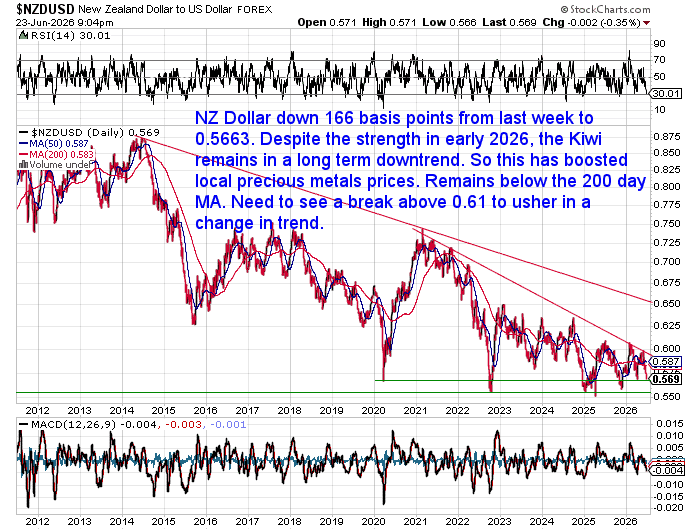
💱 NZD/USD fell 166 basis points (-2.85%) to 0.5663
The Kiwi dollar weakened sharply this week and remains within its long-term downtrend. A sustained move above 0.61 would be needed to signal a meaningful trend change. Until then, the weaker NZ dollar continues to support local gold and silver prices.
Why New Zealand May Have Little Say In The Next Monetary Reset
Talk of a “global currency reset” has been circulating for years. Some believe the US dollar’s dominance is fading. Others point to record central bank gold buying, the rise of BRICS nations, and growing geopolitical tensions as signs that the international monetary system is changing.
But if the global financial system does evolve, where does New Zealand fit into the picture?
In this week’s featured article, we explore:
- Why monetary systems have changed many times throughout history,
- Why gold keeps appearing in discussions about the future of money, and;
- Whether a small country like New Zealand would have any influence if a new monetary order emerges.
Read the full article: What Could A Global Currency Reset Mean For New Zealand?

This Week’s Interview: John Butler On Gold, Monetary Change And A Multipolar World
This week’s featured article explored whether a changing global monetary system could affect New Zealand.
By coincidence, one of the most interesting interviews we’ve seen this week tackles the same question from a global perspective.
John Butler recently joined Paul Buitink of Holland Gold to discuss three big themes.
Central banks are buying gold.
The world is becoming more multipolar.
And gold may be moving back towards a more important role in the international monetary system.
A common thread is beginning to emerge.
Several respected figures in the precious metals industry are making a similar observation.
Not that a dramatic monetary reset is imminent.
Their view is that by the early 2030s we may look back and realise the monetary system changed far more than most people noticed at the time.
Interestingly, this is not a new argument from Butler.
We first heard him present in Auckland back in 2013 (see: John Butler in Auckland: “Remonetisation of gold is inevitable”), where he argued that the world was moving towards a more multipolar monetary system and that gold would eventually regain a larger role in international finance.
More than a decade later, the core thesis remains much the same. What has changed is the amount of evidence supporting it. Since then:
- Central banks have bought gold at record levels.
- Countries have diversified reserves.
- BRICS has expanded.
- Discussions about alternatives to the US dollar have become more common.
Ideas that once seemed controversial are now receiving much wider attention.
Butlers Price Targets
Butler also discussed long-term gold valuations, referencing research suggesting gold could potentially reach US$8,000 per ounce if emerging market central banks continue increasing their gold reserves.
He went a step further, arguing that reserve-based valuation models can support substantially higher figures over time. In his view, US$40,000-$50,000 gold is theoretically possible.
His argument is not that gold itself becomes more valuable, but that government debt, money supply and financial claims continue expanding while the supply of monetary metal remains relatively fixed.
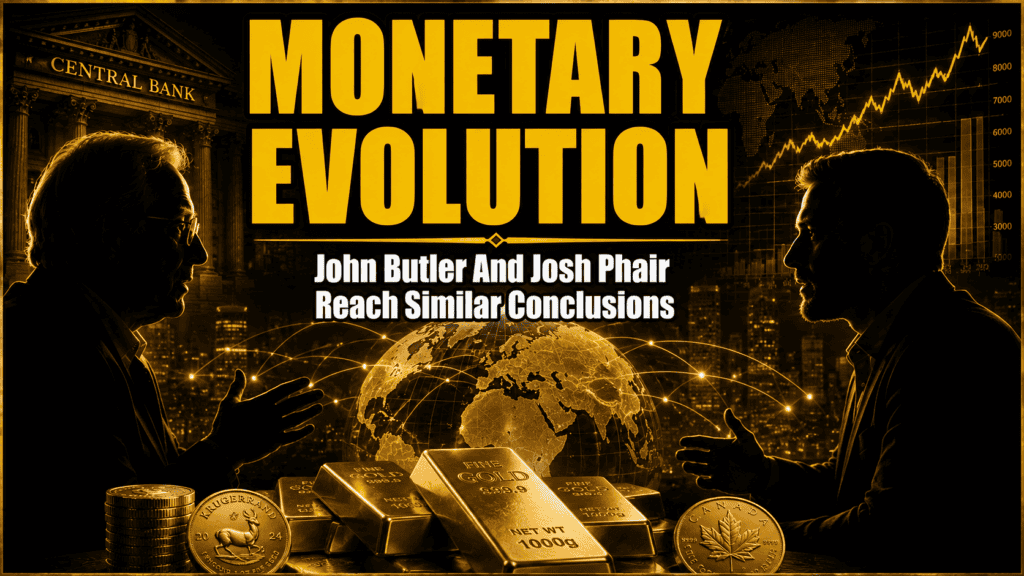
John Butler And Josh Phair See A Similar Trend
The price forecasts are interesting.
What caught our attention, however, was how closely Butler’s comments aligned with observations we’ve recently heard from Scottsdale Mint CEO Josh Phair.
In a recent interview, Josh suggested that by around 2030-2032 we may look back and realise the financial system changed significantly, even though there was no single reset event or defining moment.
Butler appears to be describing much the same process.
The similarity is striking given the two men arrived at their conclusions independently.
Both are describing a monetary system that evolves gradually through changes in trade, reserve management and central bank behaviour, rather than through a formal announcement or coordinated reset.
When John Butler spoke in Auckland in 2013, his view that gold would eventually be remonetised seemed controversial.
Today, many of the trends he discussed are no longer theoretical.
Whether his conclusions ultimately prove correct remains uncertain.
But the argument itself has become harder to dismiss.
And if the world does continue moving towards a more multipolar monetary system, what could that mean for New Zealand?
That’s exactly the question we explore in this week’s feature article: What Could A Global Currency Reset Mean For New Zealand?

Glenn's dedication to educating individuals on wealth protection through precious metals has helped over 2400 clients from New Zealand, Australia, USA and Europe to safeguard their financial futures. Passionate about financial independence and lifestyle freedom, Glenn’s mission is to empower others with the knowledge and tools to thrive in today’s volatile economic environment. When he's not advising on precious metals, Glenn enjoys spending time with his family and pursuing outdoor adventures.
Education: University of Auckland Bachelor of Science
Linkedin: https://www.linkedin.com/in/glenn-thomas-0984a4310/
- Why Buy Gold? A New Zealand Guide to Protecting Your Wealth - August 11, 2026
- When the Crowd Loses Interest, Who Keeps Buying? - August 5, 2026
- If the US Dollar Was Linked to Gold Again, What Would It Mean for New Zealand? - August 3, 2026
