


This Week
Weekly Price Overview – 27 May 2026
Precious metals stabilised this week as gold held support despite rising Treasury yields, while silver rebounded from recent pullbacks.
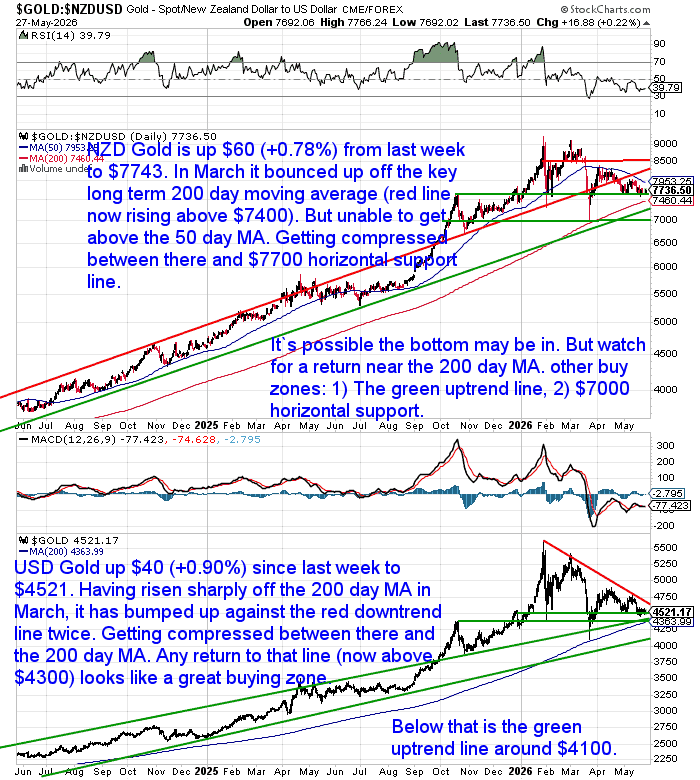
🟡 NZD gold rose $60 (+0.78%) to $7,743
NZD gold held above key support near $7,700 but remains below the 50-day MA. The rising 200-day MA near $7,400 continues acting as important long-term support.
USD gold gained $40 (+0.90%) to $4,521
USD gold continued consolidating after rebounding from the 200-day MA in March. Price remains compressed between long-term support and overhead resistance. The 200-day MA near $4,300 remains key support.
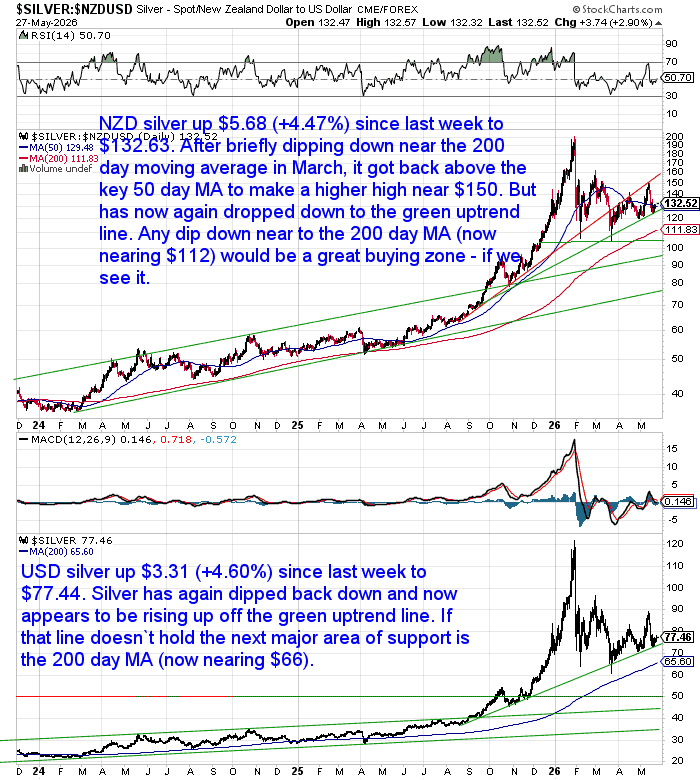
⚪ NZD silver rose $5.68 (+4.47%) to $132.63
NZD silver rebounded after testing the long-term uptrend line. The rising 200-day MA near $112 remains strong support. A break back above the 50-day MA would improve short-term momentum.
USD silver gained $3.41 (+4.60%) to $77.44
USD silver bounced from its uptrend line and remains above the 200-day MA near $66. The longer-term uptrend remains intact despite recent volatility.
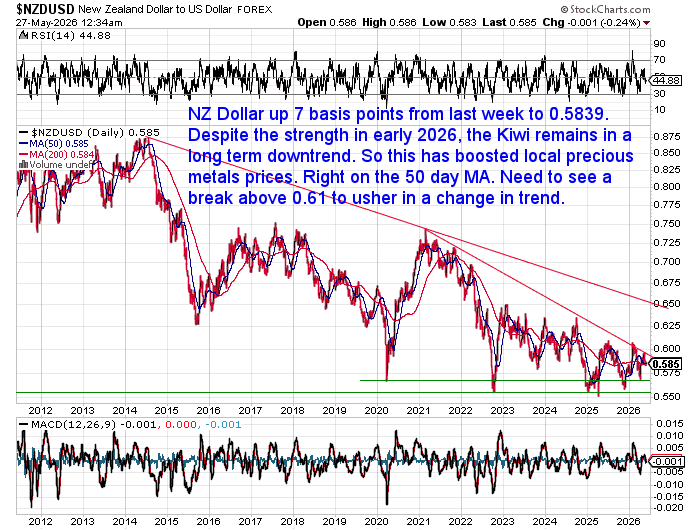
💱 NZD/USD rose 7 basis points (+0.12%) to 0.5839
The Kiwi dollar was little changed and remains in a broader downtrend. That continues supporting NZD precious metals prices. NZD/USD is still struggling near the 50-day MA, while 0.61 remains key resistance.
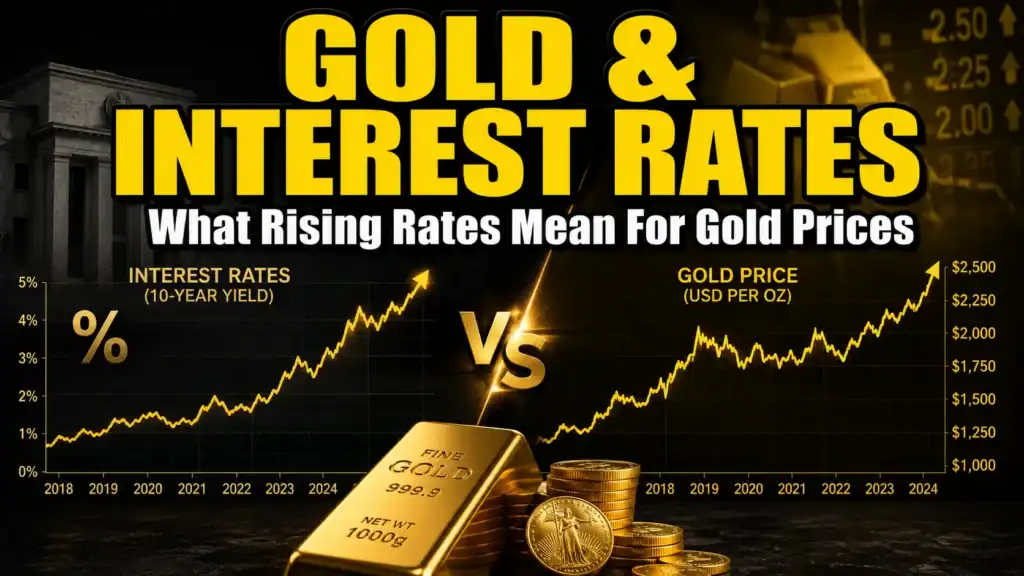
Rising Interest Rates and Gold: Is the Relationship Really That Simple?
Many investors assume higher interest rates are automatically negative for gold.
But history shows the relationship is often more complicated.
In this guide, we look at:
- why gold has sometimes risen during rate-hiking cycles
- why inflation and debt still matter
- what previous Federal Reserve hiking periods can teach us
- and why short-term market moves do not always tell the full story
Read: Gold and Interest Rates: What Rising Rates Mean for Gold Prices
Rising Yields, Big Targets: What Happens Next for Gold?
Gold Starts Resisting Higher Bond Yields
Last week we looked at how rising US Treasury yields have recently been putting short-term pressure on gold and silver.
This week there may be early signs that relationship is weakening.
Dana Samuelson noted that despite the US 10-year Treasury yield recently making new highs, gold has so far held support above US$4,450 rather than continuing lower.
Gold and yields have shown a strong inverse relationship for much of this year.
If gold begins stabilising while yields remain elevated, it may support the idea we discussed in this week’s featured article:
Higher interest rates do not always lead to lower gold prices.
Over longer periods, inflation, debt levels, currency weakness and confidence in the monetary system can become more important than interest rates alone.
As always, one week does not make a trend. But it is a development worth watching.
Big Banks Raise Their Gold Targets
Despite recent volatility, many major institutions continue raising their long-term gold forecasts.
This week David William Scott shared a roundup of 2026 targets from several large banks and analysts.

Among the forecasts:
- J.P. Morgan: US$6,300
- UBS: US$6,200
- Wells Fargo: US$6,100–$6,300
- Deutsche Bank: US$6,000
- Goldman Sachs: US$5,400
Some silver forecasts were even more aggressive, with Bank of America discussing a bull case as high as US$309.
MKS PAMP’s Nicky Shiels also expects further upside longer term, although she noted gold may continue consolidating in the short term as markets react to interest rates, oil prices and economic data.
She said the longer-term bull case remains tied to debt levels, US dollar weakness and geopolitical risk.
Price targets should never be treated as guarantees.
But they can provide insight into how institutional investors are thinking about debt, inflation, currencies and the broader monetary system.
Why Are Some Analysts So Bullish on Gold?
One major theme this year has been growing central bank reserve diversification.
According to Deutsche Bank, the US dollar’s share of global reserves has fallen sharply over recent decades while gold allocations have been rising again.
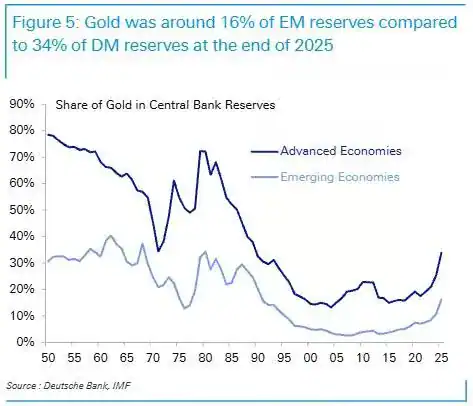
The argument is that continued central bank buying could have a large impact because the physical gold market remains relatively small.
This is one reason some analysts are now discussing gold price targets that would have seemed unrealistic only a few years ago.
Many of these targets are based on broader monetary and valuation frameworks rather than short-term technical analysis.
Some analysts compare gold to global debt levels, money supply growth, central bank reserves, stock market valuations or historical monetary backing ratios.
We explored several of these valuation models in more detail here:
How Do You Value Gold? What Price Could Gold Reach?
Gold Is Increasingly Being Viewed as a Monetary Asset Again
That theme also runs through the newly released 2026 In Gold We Trust Report.
The report argues the current bull market is not simply being driven by speculation, but by:
- rising sovereign debt
- persistent inflation pressures
- declining confidence in fiat currencies
- geopolitical fragmentation
- and shifting reserve allocation trends
One of the report’s key observations is how small gold still remains relative to global financial assets.
According to the report, privately held gold represents only around 2.7% of global financial assets.
That suggests institutional allocation to gold may still be low despite the strong bull market already underway.
So What Should Investors Take From All This?
Gold and silver may remain volatile as markets react to interest rates, inflation data and economic expectations.
But the bigger picture continues pointing toward the same long-term themes we have discussed repeatedly over recent years:
- rising debt levels
- concerns around fiat currencies
- geopolitical fragmentation
- and declining confidence in traditional financial assets
Markets rarely move in a straight line.
Short-term pullbacks and consolidations can happen even during powerful long-term trends.
If this week’s market action left you wondering whether rising rates are bullish or bearish for gold, make sure to read this week’s featured article:
Gold and Interest Rates: What Rising Rates Mean for Gold Prices
If you’re ready to buy, then check out the range of gold and silver products available.

Glenn's dedication to educating individuals on wealth protection through precious metals has helped over 2400 clients from New Zealand, Australia, USA and Europe to safeguard their financial futures. Passionate about financial independence and lifestyle freedom, Glenn’s mission is to empower others with the knowledge and tools to thrive in today’s volatile economic environment. When he's not advising on precious metals, Glenn enjoys spending time with his family and pursuing outdoor adventures.
Education: University of Auckland Bachelor of Science
Linkedin: https://www.linkedin.com/in/glenn-thomas-0984a4310/
- Why You Should Become Your Own Central Bank - June 28, 2026
- John Butler, Josh Phair And The Case For Gradual Monetary Change - June 24, 2026
- What Could A Global Currency Reset Mean For New Zealand? - June 19, 2026
