
Monetary System
Watch What Central Banks Do, Not Just What Governments Say

Jul
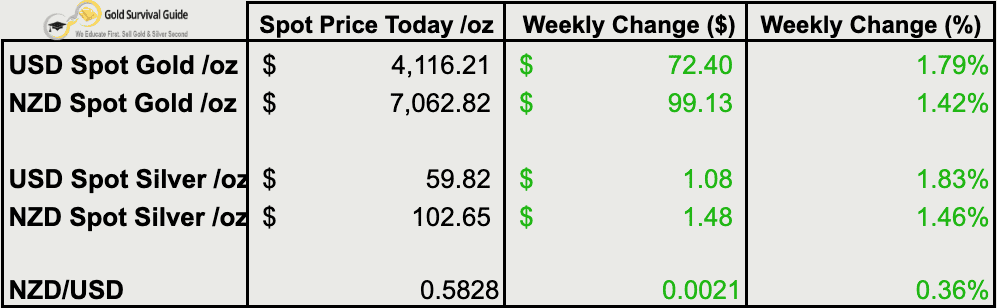
Table of contents
Estimated reading time: 6 minutes
📊 Weekly Price Overview – 22 Jul 2026
Precious metals rebounded this week after again testing key support levels. Gold and silver both bounced strongly as buyers stepped back in around long-term buying zones. Averaging in continues to look sensible while these levels are being tested.
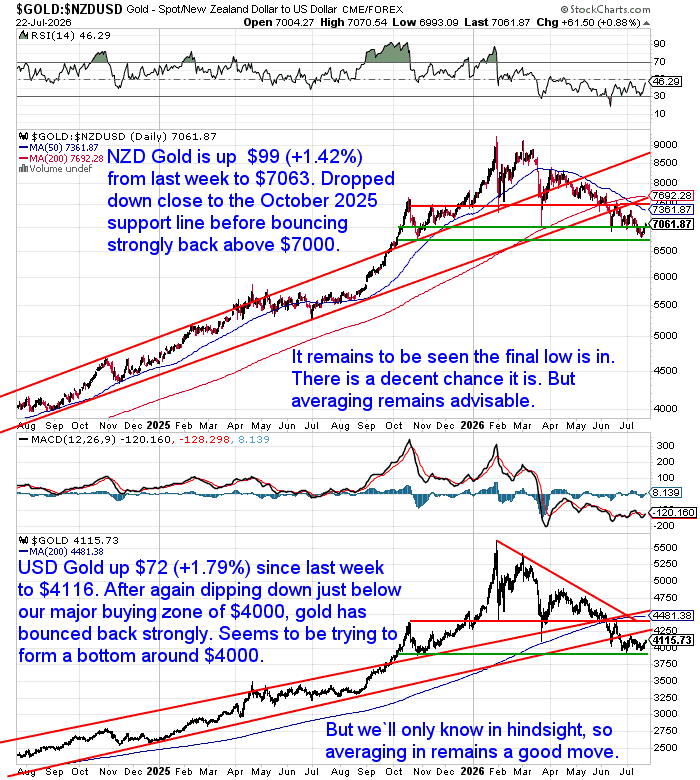
🟡 NZD gold rose $99 (+1.42%) to $7,063
NZD gold rebounded strongly back above $7,000 after briefly dipping near the October 2025 support level. It remains to be seen whether the final low is in, but averaging in continues to look sensible.
🟡 USD gold rose $72 (+1.79%) to $4,116
USD gold again bounced from just below the major $4,000 buying zone. It appears to be forming a bottom around this level, although that will only be clear in hindsight. Averaging in remains a sensible approach.
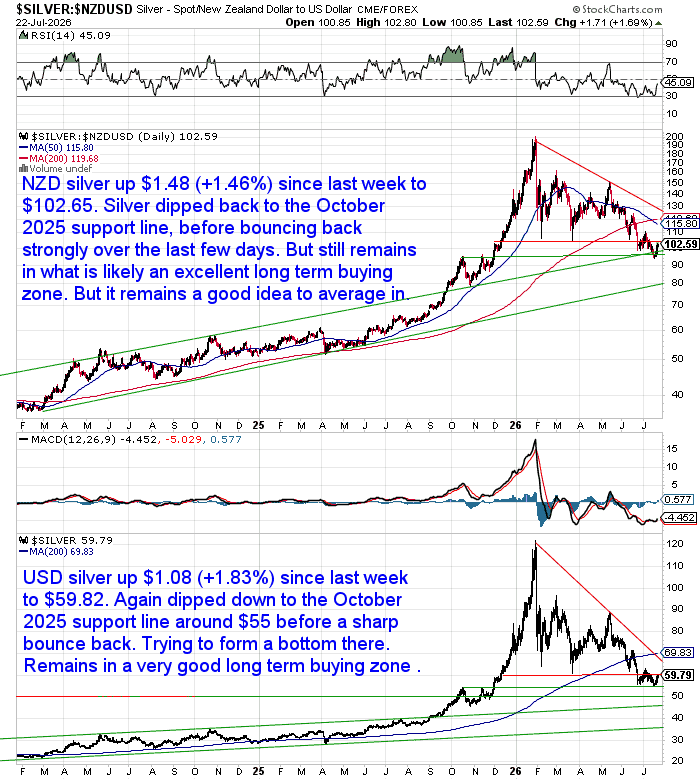
⚪ NZD silver rose $1.48 (+1.46%) to $102.65
NZD silver bounced strongly after retesting the October 2025 support area. It remains in an excellent long-term buying zone. Averaging in continues to make sense.
⚪ USD silver rose $1.08 (+1.83%) to $59.82
USD silver also rebounded after retesting support around $55. It continues to represent a very good long-term buying zone while trying to form a bottom.
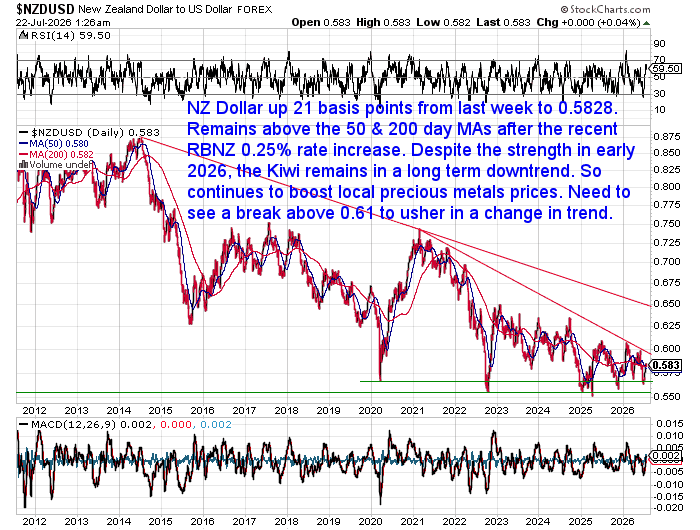
💱 NZD/USD rose 21 basis points (+0.36%) to 0.5828
The Kiwi dollar remains above its 50 and 200-day moving averages following the recent RBNZ rate cut. Despite the recent strength, the longer-term trend remains down, so it continues to support local precious metals prices.
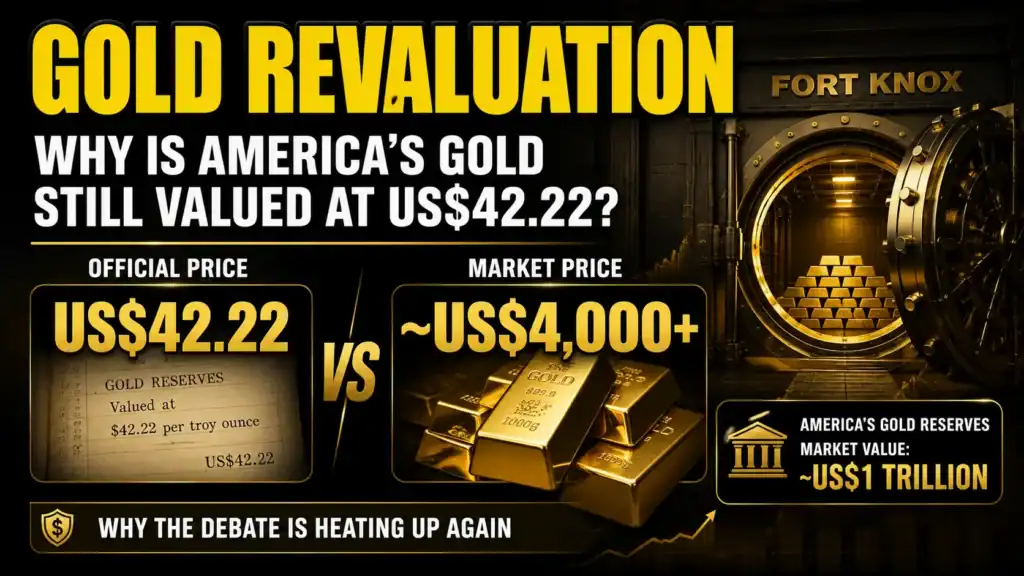
Gold Revaluation Is Back in the Headlines. Here’s Why
For decades, gold revaluation was a topic reserved for economists and precious metals specialists. Now it’s making headlines again. The reason? The US still officially values its gold reserves at just US$42.22 an ounce—even though gold trades for nearly US$4,000.
Why does this decades-old accounting rule still exist, and why are people suddenly talking about changing it?
This week’s article explores what’s behind the renewed debate, what gold revaluation actually means, and why it’s attracting fresh attention.
→ Read the full article: Gold Revaluation: Why the Debate Is Heating Up Again
Watch What Central Banks Do, Not Just What Governments Say
Fort Knox Is Back in the Spotlight
Treasury Secretary Scott Bessent’s recent comments about Fort Knox have helped put America’s gold reserves back into the public conversation.
Bessent reassured the public that the gold held at Fort Knox remains “present and accounted for.”
Whether or not the reserves are ever independently audited again is almost beside the point.
America’s gold reserves have become a topic of public discussion again.
Only a few years ago, almost nobody outside the precious metals community was talking about Fort Knox. Today it’s back in the financial headlines.
Central Banks Continue Buying the Dip
While the debate continues over America’s gold reserves, central banks continue doing something much simpler – they keep buying gold.
This week Poland’s central bank confirmed it has been consistently adding to its reserves during the recent pullback. Governor Adam Glapiński said the bank has been “taking advantage of the recent price drops.“
China appears to be following a similar approach. Official purchases have increased each month since March. June saw the country’s largest monthly purchase in three years.
That builds directly on what we discussed two weeks ago when we looked at why central banks continue expanding their gold reserves.
Rather than reacting to short-term price movements, central banks continue treating gold as a long-term reserve asset.
East vs West: Different Priorities, Different Approaches
Last week we looked at how the centre of gravity in the gold market continues shifting east.
This week’s developments provide another example — not of where the gold is moving, but of how different parts of the world view gold’s role within the financial system.
While China is tightening restrictions on leveraged “paper gold” trading for retail investors, the CME Group is expanding access with a new 24/7 one-ounce gold futures contract aimed at retail traders.
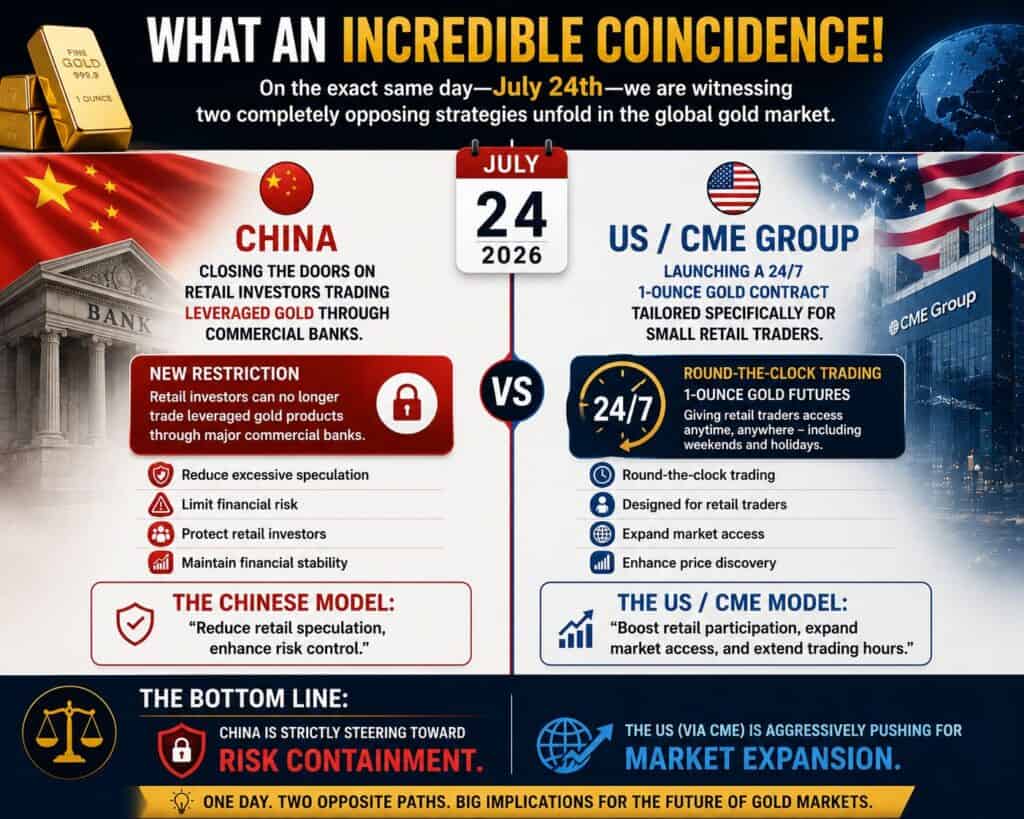
Source: Virendra Vyas
At the same time, Asian central banks continue accumulating physical gold while much of the discussion in Western markets remains focused on trading and short-term price movements.
Whether these different approaches will lead to different outcomes remains to be seen. What they do show is that the East and West are increasingly viewing gold through different lenses:
the other on market access and trading.
one focused more on physical ownership and long-term reserves,
In Closing
Over the past few weeks we’ve looked at why central banks continue building their gold reserves, how the centre of gravity in the gold market is gradually shifting East, and why America’s official gold reserves are back in the headlines.
Those may seem like separate developments. But together they lead to an obvious question:
If gold no longer matters, why are governments talking about it again — and why do central banks keep buying it?
We don’t pretend to know exactly where the monetary system is heading.
But questions like these remind us why it’s important to look beyond the daily gold price and pay attention to the bigger picture.

Glenn's dedication to educating individuals on wealth protection through precious metals has helped over 2400 clients from New Zealand, Australia, USA and Europe to safeguard their financial futures. Passionate about financial independence and lifestyle freedom, Glenn’s mission is to empower others with the knowledge and tools to thrive in today’s volatile economic environment. When he's not advising on precious metals, Glenn enjoys spending time with his family and pursuing outdoor adventures.
Education: University of Auckland Bachelor of Science
Linkedin: https://www.linkedin.com/in/glenn-thomas-0984a4310/
- What Type of Gold Bar Should I Buy? (Best Sizes, Brands & Bars Explained) - October 20, 2026
- Gold Prices Fall as ETF Investors and Established NZ Buyers Keep Buying - October 14, 2026
- What Are The Different Types of Gold Bars? - October 13, 2026
